
Item No.: 88490

Manufacturer: Denix
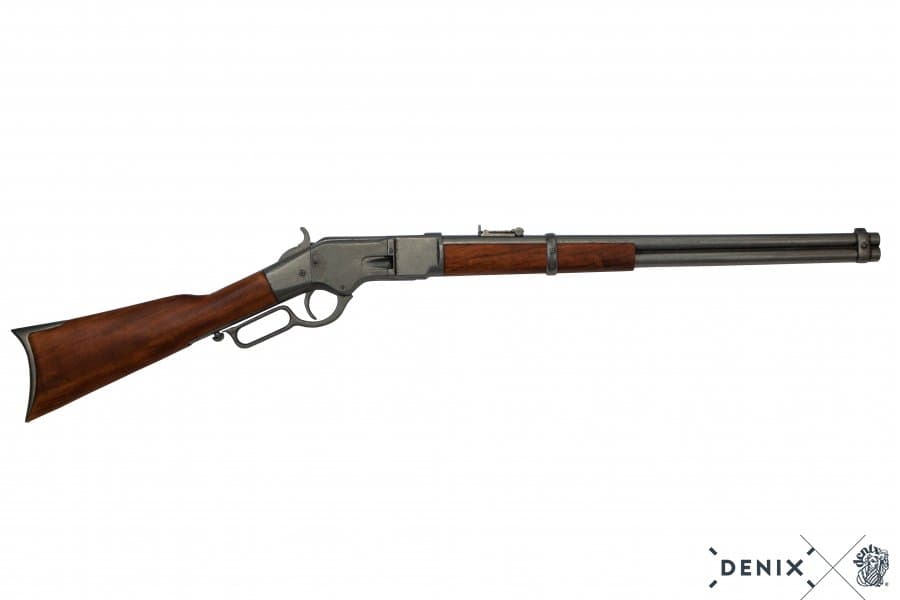
Winchester grau U.S.A. ca.1866
No reviews
259,00 €
incl. 19% VAT, plus
⭐ You receive 259 bonus points for this order
This item is in stock
Mod. 66 carbine, designed by Winchester, USA 1866.
The original Winchester rifle- the Winchester Model 1866- was famous for its rugged construction and lever-action mechanism that allowed the rifleman to fire a number of shots before having to reload: hence the term, "repeating rifle." Nelson King's new improved patent remedied flaws in the Henry rifle by incorporating a loading gate on the side of the frame and integrating a round sealed magazine which was covered by a fore stock. Originally chambered in the rimfire .44 Henry, the Model 1866 was nicknamed the "Yellow Boy" because of its "brass" receiver (actually a bronze alloy called gunmetal).
Dimensions: 100 cm
Weight: 3,000 g
Epoch: Western and American Civil War 1861-1899
Type Collectible: Rifles & carbines
The original Winchester rifle- the Winchester Model 1866- was famous for its rugged construction and lever-action mechanism that allowed the rifleman to fire a number of shots before having to reload: hence the term, "repeating rifle." Nelson King's new improved patent remedied flaws in the Henry rifle by incorporating a loading gate on the side of the frame and integrating a round sealed magazine which was covered by a fore stock. Originally chambered in the rimfire .44 Henry, the Model 1866 was nicknamed the "Yellow Boy" because of its "brass" receiver (actually a bronze alloy called gunmetal).
Dimensions: 100 cm
Weight: 3,000 g
Epoch: Western and American Civil War 1861-1899
Type Collectible: Rifles & carbines
- Item No.
- 88490
- Manufacturer
- Denix
- EAN
- 8435089711400
- Weight
- 3 kg
- Delivery time
- This item is in stock
Shipping costs
| Country | Order value under €50 | Order value from €50 |
|---|---|---|
| 🇩🇪Germany | 6,00 € | 8,00 € |
| 🇦🇹Austria | 10,00 € | 12,00 € |
| 🇨🇭Switzerland | 10,00 € | 12,00 € |
| 🇧🇪Belgium | 8,00 € | 11,00 € |
| 🇧🇬Bulgaria | 15,00 € | 50,00 € |
| 🇩🇰Denmark | 10,00 € | 12,00 € |
| 🇪🇪Estonia | 22,00 € | 25,00 € |
| 🇫🇮Finland | 12,00 € | 27,00 € |
| 🇫🇷France | 14,00 € | 17,00 € |
| 🇬🇷Greece | 10,00 € | 35,00 € |
| 🇮🇪Ireland | 12,00 € | 25,00 € |
| 🇮🇹Italy | 10,00 € | 17,00 € |
| 🇭🇷Croatia | 10,00 € | 50,00 € |
| 🇱🇻Latvia | 10,00 € | 25,00 € |
| 🇱🇮Liechtenstein | 10,00 € | 25,00 € |
| 🇱🇹Lithuania | 10,00 € | 25,00 € |
| 🇱🇺Luxembourg | 10,00 € | 12,00 € |
| 🇲🇹Malta | 10,00 € | 50,00 € |
| 🇳🇱Netherlands | 8,00 € | 10,00 € |
| 🇳🇴Norway | 10,00 € | 27,00 € |
| 🇵🇱Poland | 12,00 € | 20,00 € |
| 🇵🇹Portugal | 10,00 € | 25,00 € |
| 🇷🇴Romania | 10,00 € | 50,00 € |
| 🇸🇪Sweden | 10,00 € | 20,00 € |
| 🇸🇰Slovakia | 12,00 € | 18,00 € |
| 🇸🇮Slovenia | 13,00 € | 18,00 € |
| 🇪🇸Spain | 12,00 € | 23,00 € |
| 🇨🇿Czech Republic | 13,00 € | 17,00 € |
| 🇹🇷Turkey | 30,00 € | 40,00 € |
| 🇭🇺Hungary | 12,00 € | 22,00 € |
| 🇺🇸USA | 50,00 € | 50,00 € |
| 🇨🇾Cyprus | 20,00 € | 50,00 € |
| Other countries (worldwide) | 10,00 € | 40,00 € |
All prices incl. statutory VAT. Shipping within Germany via GLS or DHL.
Payment methods





 PrepaymentCash on delivery
Loading reviews...
Information pursuant to the EU General Product Safety Regulation (GPSR 2023/988).
Manufacturer
Joh. Vogler GmbHJoh. Vogler GmbH
Saturnstr. 50
85609 Aschheim
Telefon +49 89/991947-0
Email: info@vogler-gmbh.de
Responsible dealer
Swords and more GmbH
Liebigstraße 2-20, 22113 Hamburg, Germany
Other customers also bought
 18+
18+Taoforge
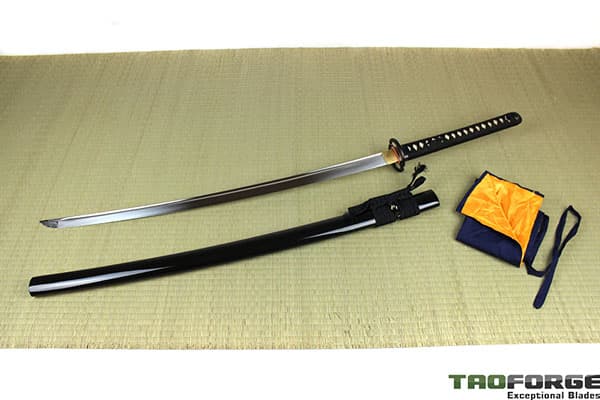
Miyamoto Musashi Katana BoHi
320,00 €
Denix
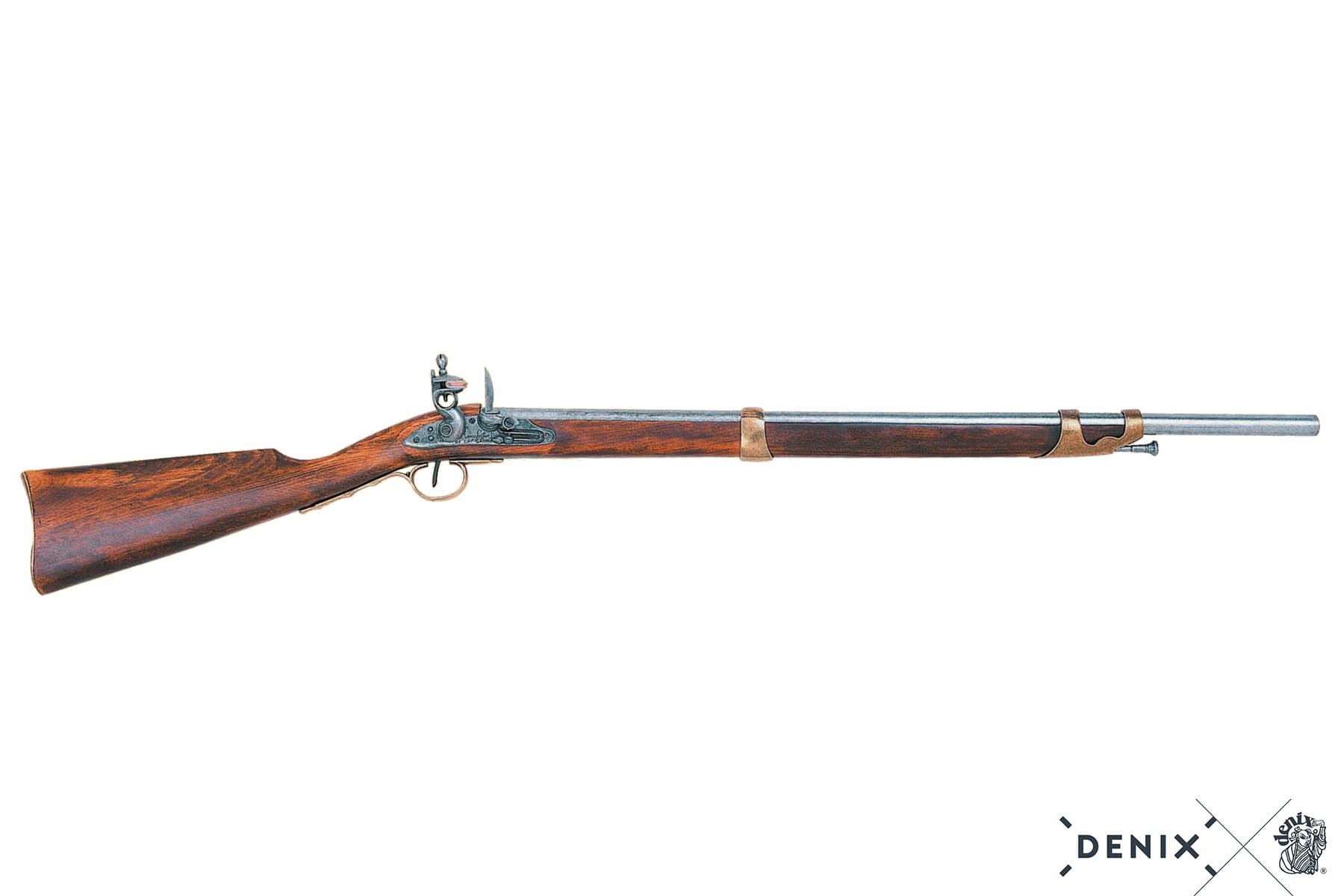
French carbine / Flintlock Napol.-Period 1806
182,90 €
 In Stock
Denix
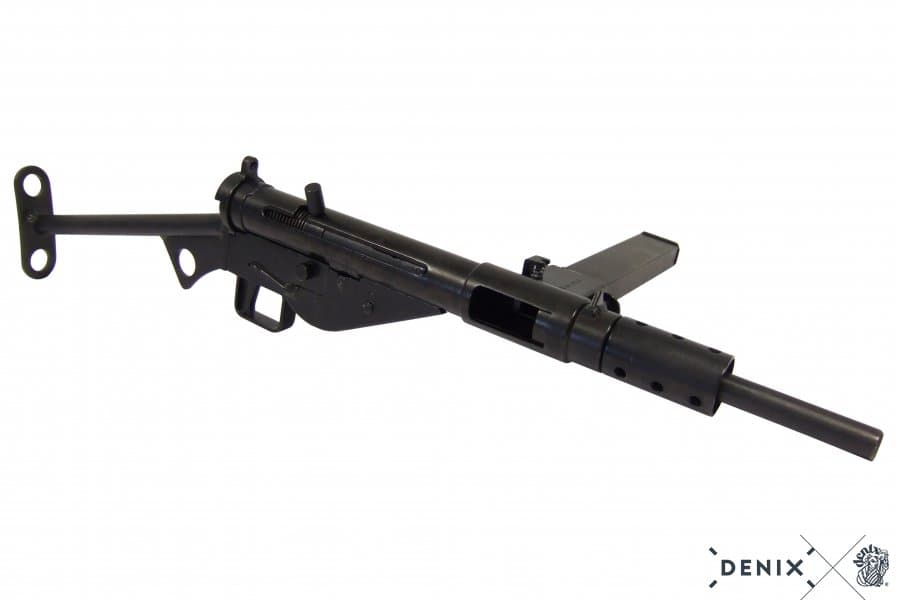
Sten Mark II, 9 mm, machine gun, England, 2nd World War, 1940
209,00 €
 In Stock18+
Swords and more
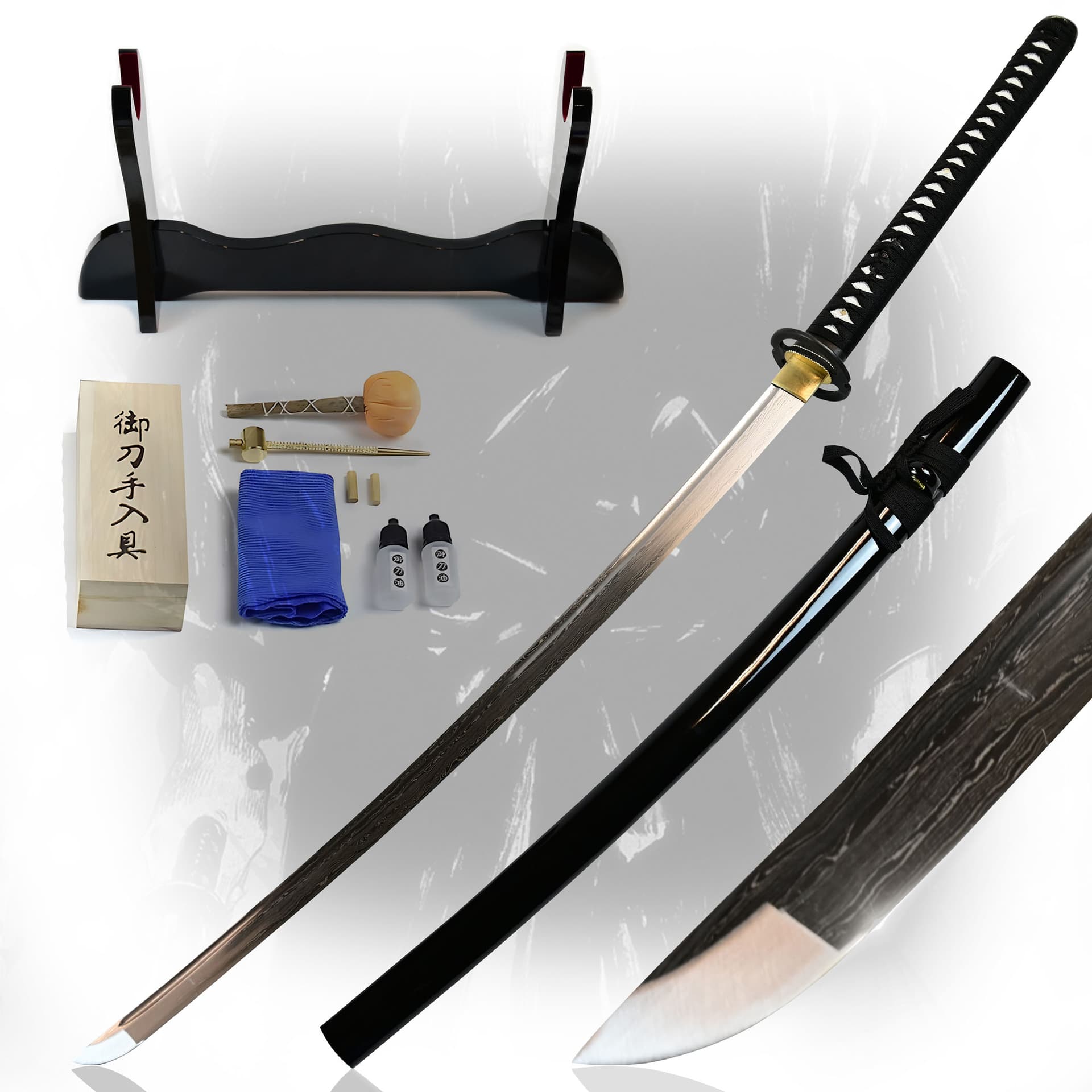
Miyamoto Musashi Katana, handforged and folded, Set
229,00 €
 In Stock18+
Swords and more
Nodachi sword - handforged & folded, Set - Blood Damascus Edition
299,00 €