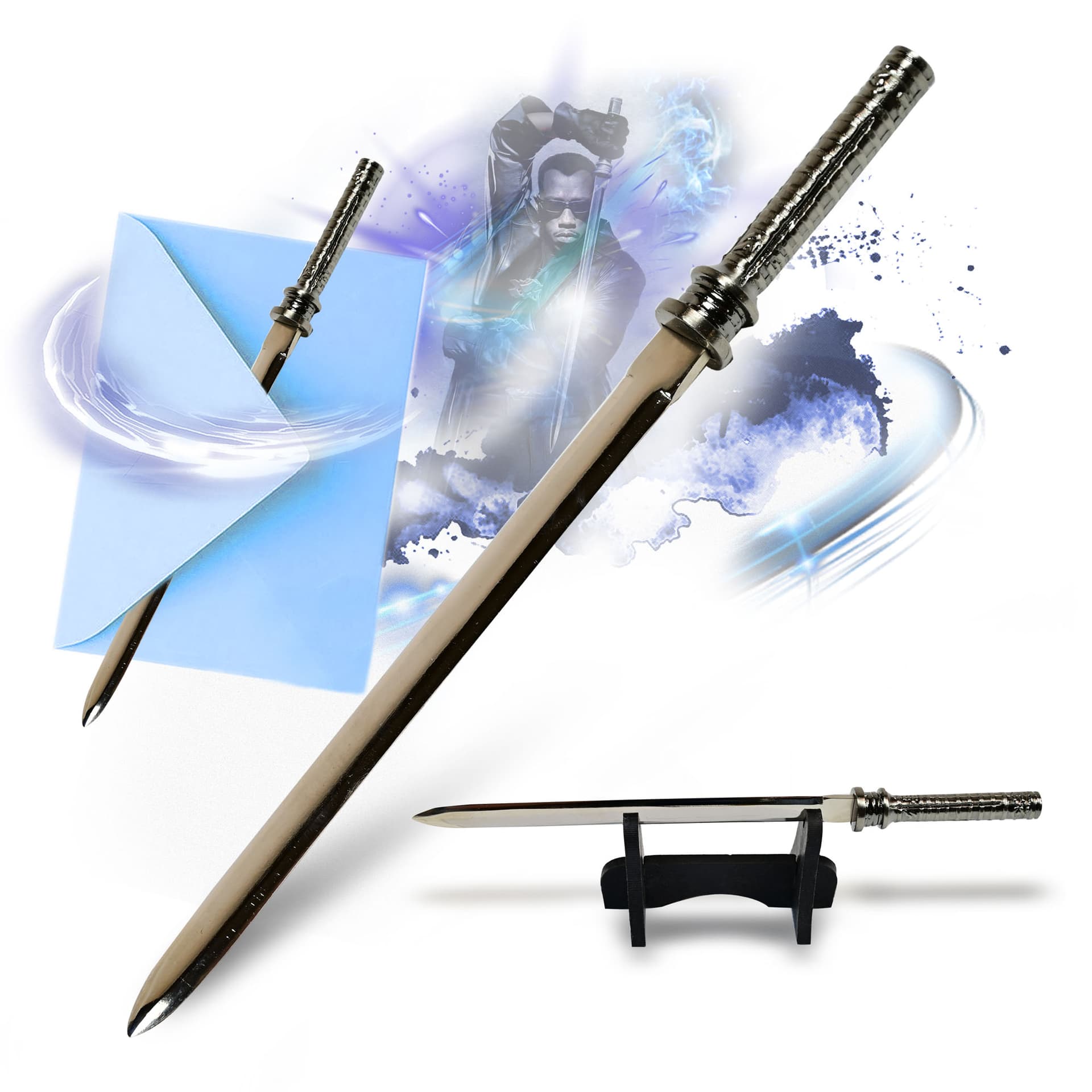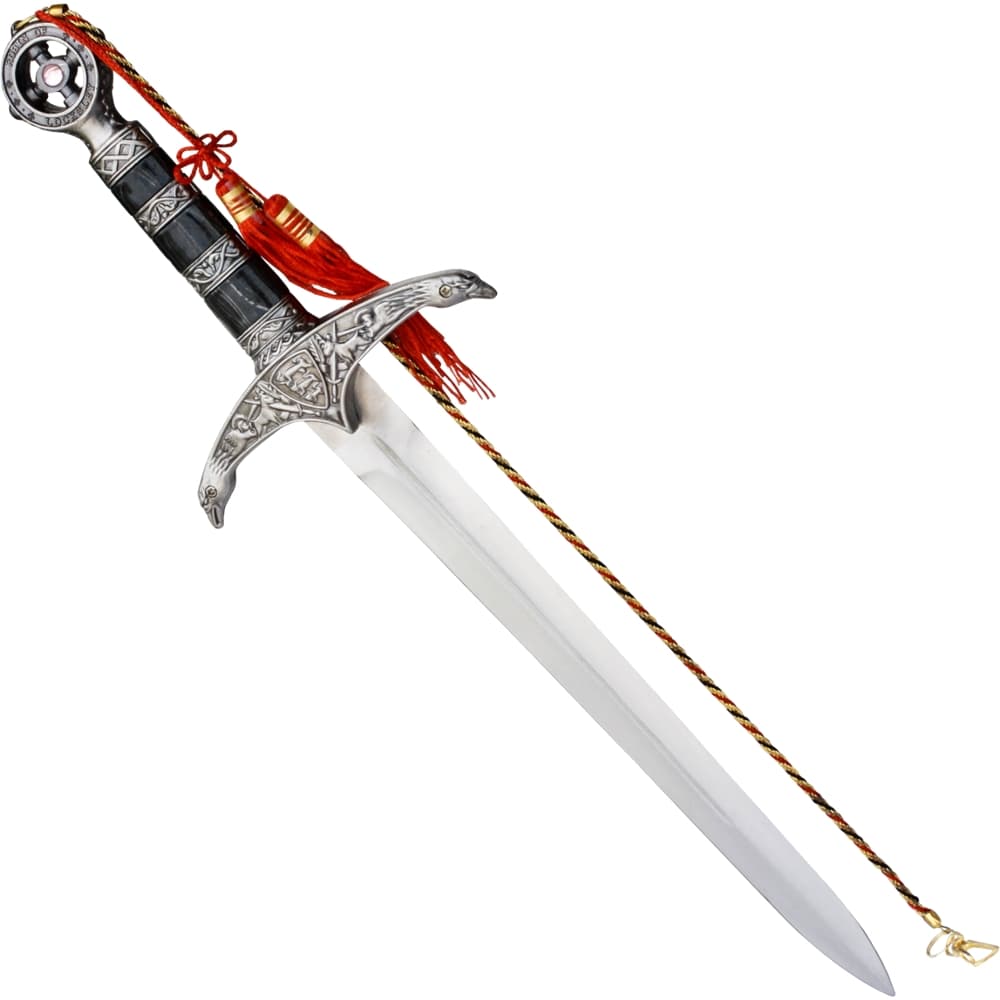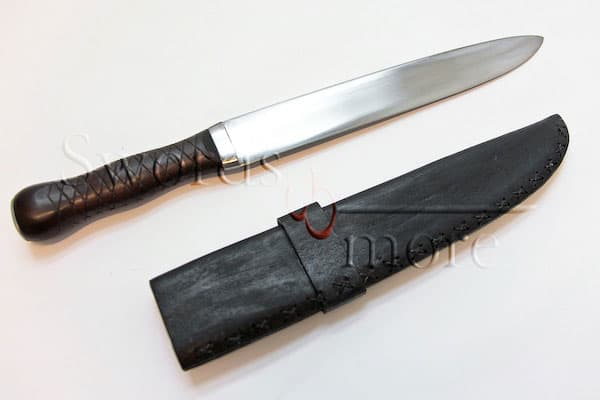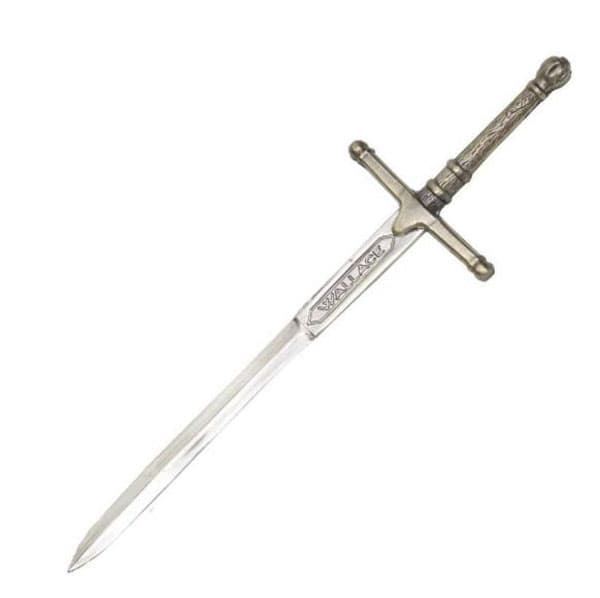
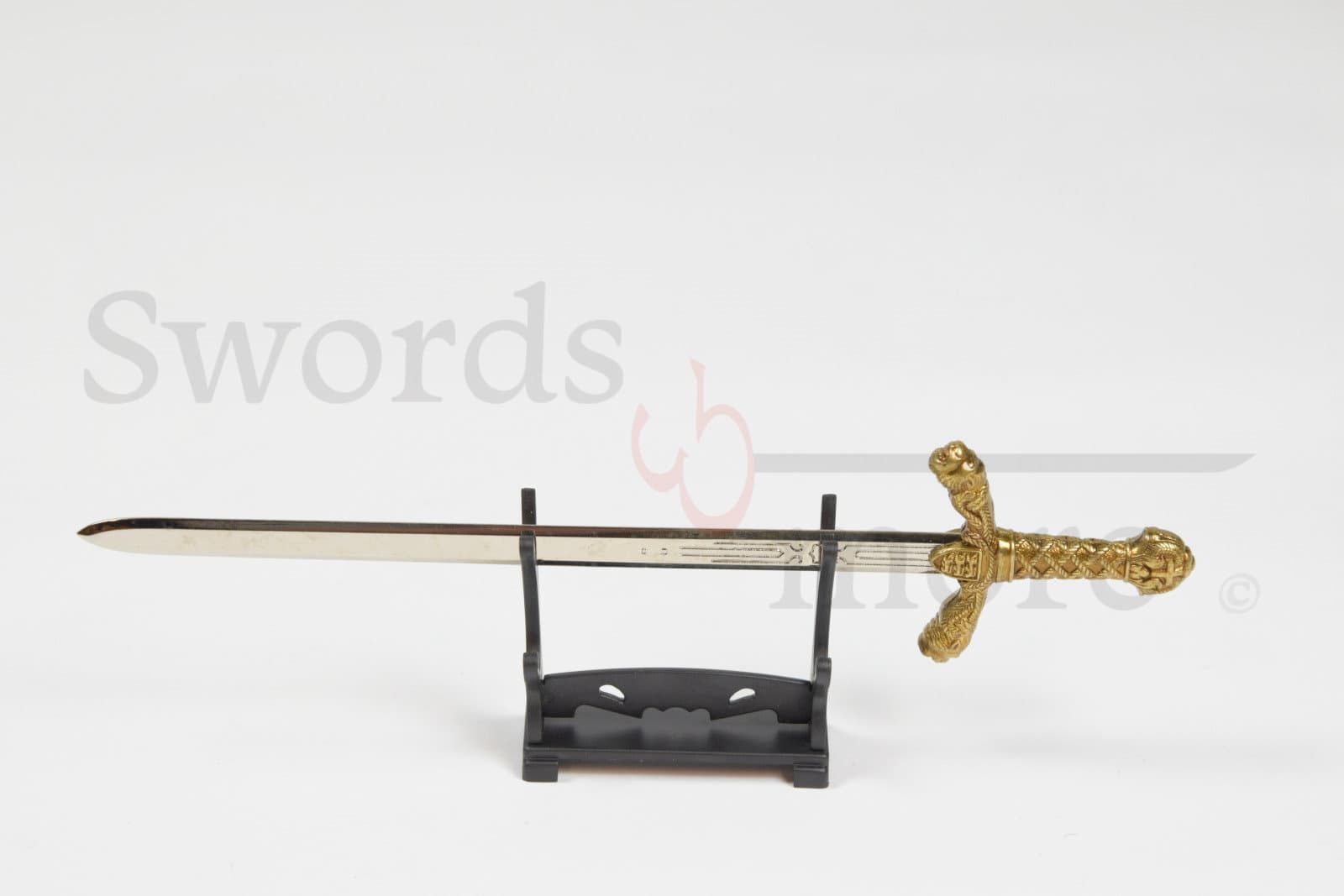

This is a replica of the Richard the Lionheart Sword in the form of a letter opener. Richard the Lionheart was one of the great warrior Kings of England from 1189 to 1199. He earnt himself various nicknames including Absent King as he was only physically in England for 6 months during his reign as King. However, he was also known as a chivalrous knight and a brave warrior which earnt him the name Richard The Lionheart. In supporting of this, Richard was riding next to a castle without protection and was shot by a bowman with an arrow. He refused treatment for this wound, got an infection and died in 1999. His name has since reached epic and mythological proportions and is best seen in literary works such as Robin Hood. This replica is steeped in history and is a perfect sword to be used for battle re-enactments or can take pride of place as a display item.
Total length: 25 cm
Blade length: 19.5 cm
Handle length: 2.5 cm
Weight: 0.08 kg
Epoch: Medieval Europe VI-XV C.
Type Collectible: Letter openers
0 of 0 reviews
Leave a review!
Share your experiences with other customers.
Login
No reviews found. Be the first to share your insights.
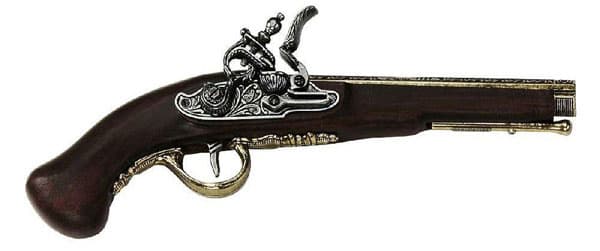
Reproduction of flintlock pistol with knife, made in wood and metal with simulating mechanism of loading and firing.Flintlock pistols, one of the most commonly used firearms by the pirates in the eighteenth century, had a flint or flint stone, which when it was triggered by the hammer produced the spark that ignited the gunpowder. All these guns required to be ammo reload manually after each shot. The ammunition, which was introduced through the mouth of the barrel, consisted of gunpowder, projectile and a paper wad, which served as a cap to keep the two previous materials compressed inside the barrel.In combat, generally these weapons were used for a single shot, since the method of reloading was very slow and it was not usually time to recharge. Therefore the fighters after shooting were forced to draw their sabers or swords or to use the knife of the pistol if they could not recharge it in time.Live the pirate adventures and misadventures in the Caribbean seas with this DENIX historical reproduction gun!
Dimensions: 38 cm
Weight: 500 g
Epoch: Colonial and Pirate 1492-XVIII C.
Type Collectible: Pistols
This hardwood helmet stand is stained and features a sturdy round, beveled base. Accommodates helmets of most sizes.18-1/4" tall. Weighs 2 lbs/10 oz.This hardwood helmet stand provides a stately, elegant way to display your favorite helmet on your mantle, bookshelf or cabinetry. It handsomely accommodates any size helmet from Roman to Great Helms (helmet not included).The beautifully turned hardwood post is stained and has a sturdy round, beveled base. The stand comes unassembled.
• Tall: 18-1/4"
• Wt: 2 lbs/10 oz
Reproduction of flintlock rifle made of metal and wood with simulated mechanism of loading and firing.The flintlock rifles had the blistering of a flint or flint stone, which when the hammer was triggered, it produced the spark that ignited the gun powder. These types of weapons required the manual recharge of their ammunition after each shot. The ammunition, which was introduced through the mouth of the barrel, consisted of gunpowder, projectile and paper wad, which served as a cap to keep the two previous ones compressed inside the barrel.The rifles could be more precise than the pistols and gave a longer effective reach. However, the sequence of loading and firing was complex, so during the training recruits were required to repeat these movements until they could be performed instinctively amidst the tension and confusion of combat. In theory, a well-trained soldier could shoot five times per minute, but in normal combat it was a rate of two or three shots per minute or less if the confrontation lasted.The trajectory of the bullet was imprecise and during the combat it was impossible to aim well. The only way to ensure certain efficiency was by grouping a high density of rifles on a reduced front, firing in as close as possible to the lowest possible distance. Even so, on many occasions, the fighters after shooting were forced to use the bayonet.Relive with the historical reproduction of this DENIX rifle the best battles of the eighteenth century!
Dimensions: 110 cm
Weight: 1,980 g
Epoch: Historical Weapons XVI-XIX C.
Type Collectible: Rifles & carbines
This Horned Viking Helmet is crafted from riveted steel plates and prominently fitted with a set of horns. The articulated cheekplates are fitted to leather hinges and they are lined with suede leather for comfort. Lining cap provides extra padding.
The two helmet ‘’eyebrows’’ are riveted brass and provide extra defense to the brow. Cheek and neck guards ensure the wearer receives protection from every side. The horns are screwed directly into the helmet.
Features an antiqued steel finish with an adjustable liner.
• Wt: 4 lbs / 13 oz
The stand shown on the picture is not included
Reproduction of flintlock blunderbuss made of metal and wood with simulated mechanism of loading and firing.Blunderbusses were typically very short, with barrel less than 60 cm of length, at the same time, musket's barrel measured more than 90 cm. The firing mechanism was based on a flint or flint stone, which the hammer produced the spark that ignited the gunpowder.All these blunderbusses required the manual recharge of their ammunition, which was inserted through the mouth of the barrel after each shot. Usually the weapon was loaded with a single bullet of lead, although also could be used with several bullets of smaller size (pellets).This blunderbuss, used in the eighteenth as predecessor of the shotgun, was very imprecise, but was useful in the approaches, during the naval battles, where the combat was at short distance. In addition, these weapons were used for a single shot, since their recharge method was very slow and there was not time available to recharge it. Therefore the fighters after firing were forced to draw their sabers or swords or to use the pistol as a bludgeon, since the circumstances did not allow to recharge it in time.Do you know that Musketeer Phortos uses a blunderbuss in the film The Three Musketeers (2011)? Relive with the historical reproduction of this DENIX blunderbuss the authentic 18th Century battles!
Dimensions: 74 cm
Weight: 2,100 g
Epoch: Historical Weapons XVI-XIX C.
Type Collectible: Blunderbuss
Reproduction of flintlock pistol with axe, made in wood and metal with simulating mechanism of loading and firing.Flintlock pistols, one of the most commonly used firearms by the pirates in the eighteenth century, had a flint or flint stone, which when it was triggered by the hammer produced the spark that ignited the gunpowder. All these guns required to be ammo reload manually after each shot. The ammunition, which was introduced through the mouth of the barrel, consisted of gunpowder, projectile and a paper wad, which served as a cap to keep the two previous materials compressed inside the barrel.In combat, generally these weapons were used for a single shot, since the method of reloading was very slow and it was not usually time to recharge. Therefore the fighters after shooting were forced to draw their sabers or swords or to use the axe of the pistol if they could not recharge it in time.Live the pirate adventures and misadventures in the Caribbean seas with this DENIX historical reproduction gun!
Dimensions: 54.5 cm
Weight: 1,290 g
Epoch: Historical Weapons XVI-XIX C.
Type Collectible: Pistols
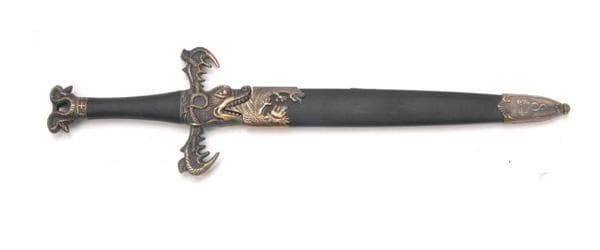
This is a replica of a Knights Templar designed as a Letter Opener. A Knights Templar is one of the most well-known military orders associated with the Crusades, the Knights Templar lasted for almost two centuries. This is a practical item that can take pride of place on a desk or in an office and can be used easily as a letter opener.
Dimensions: 25 cm
Weight: 70 g
Epoch: Medieval Europe VI-XV C.
Type Collectible: Letter openers
€12.90*
Im Außenlager - in 5-7 Tagen bei Dir zu Hause
This website uses cookies to ensure the best experience possible. More information...