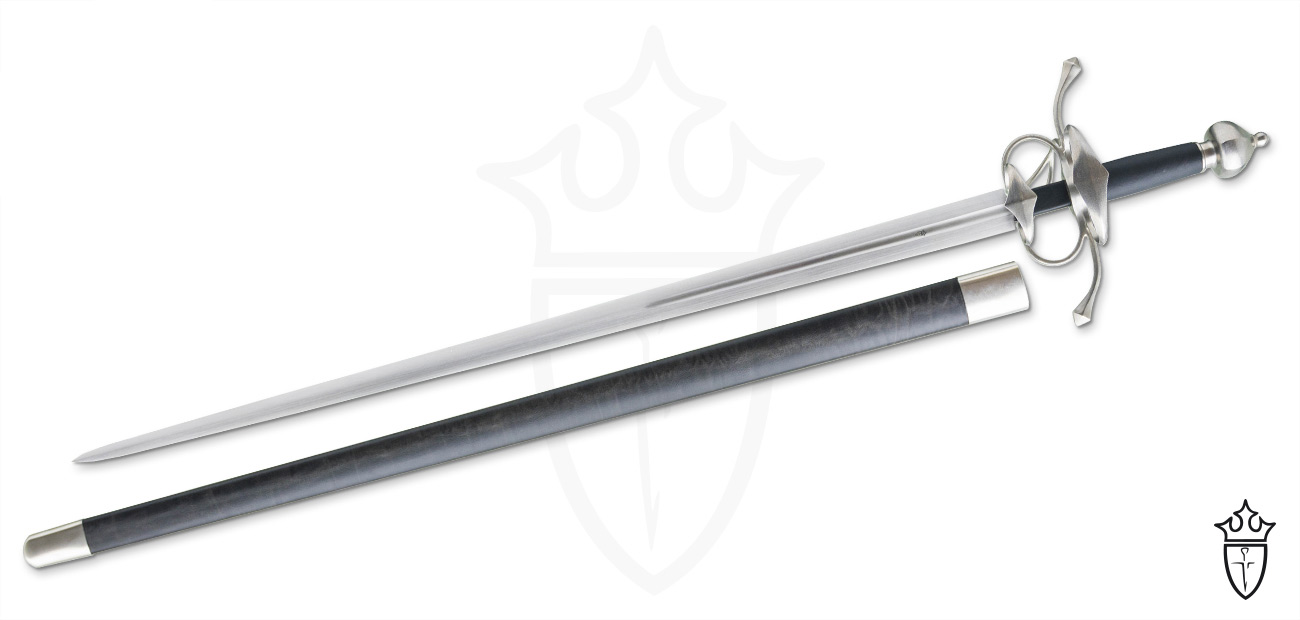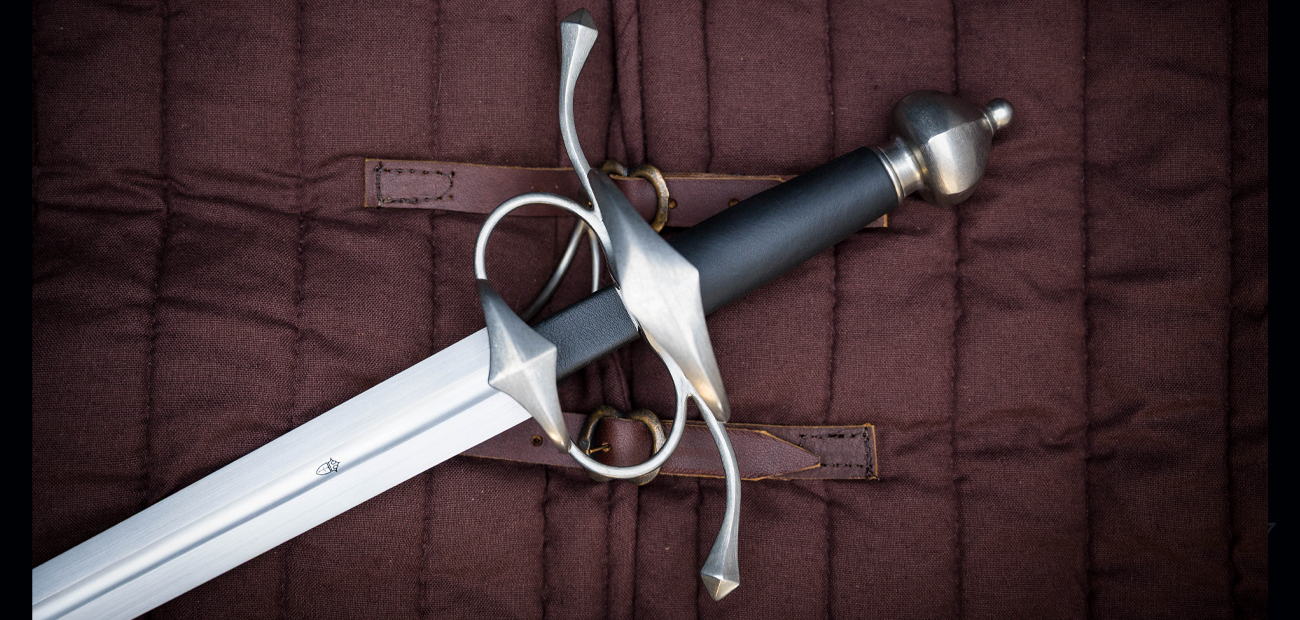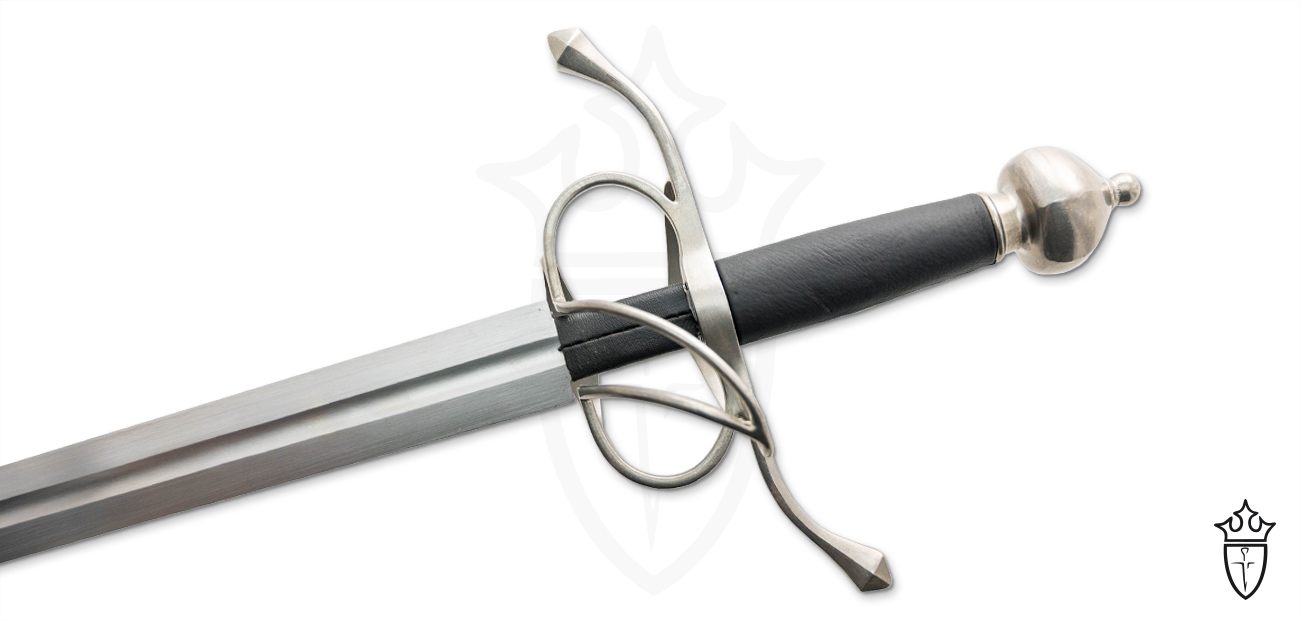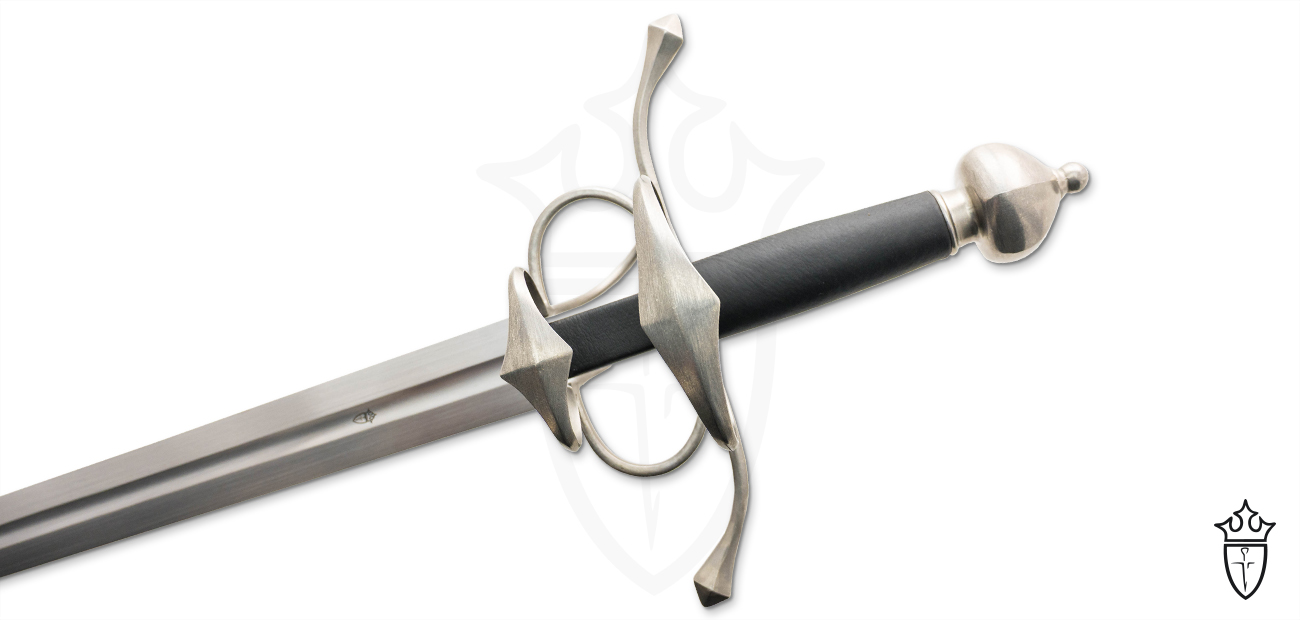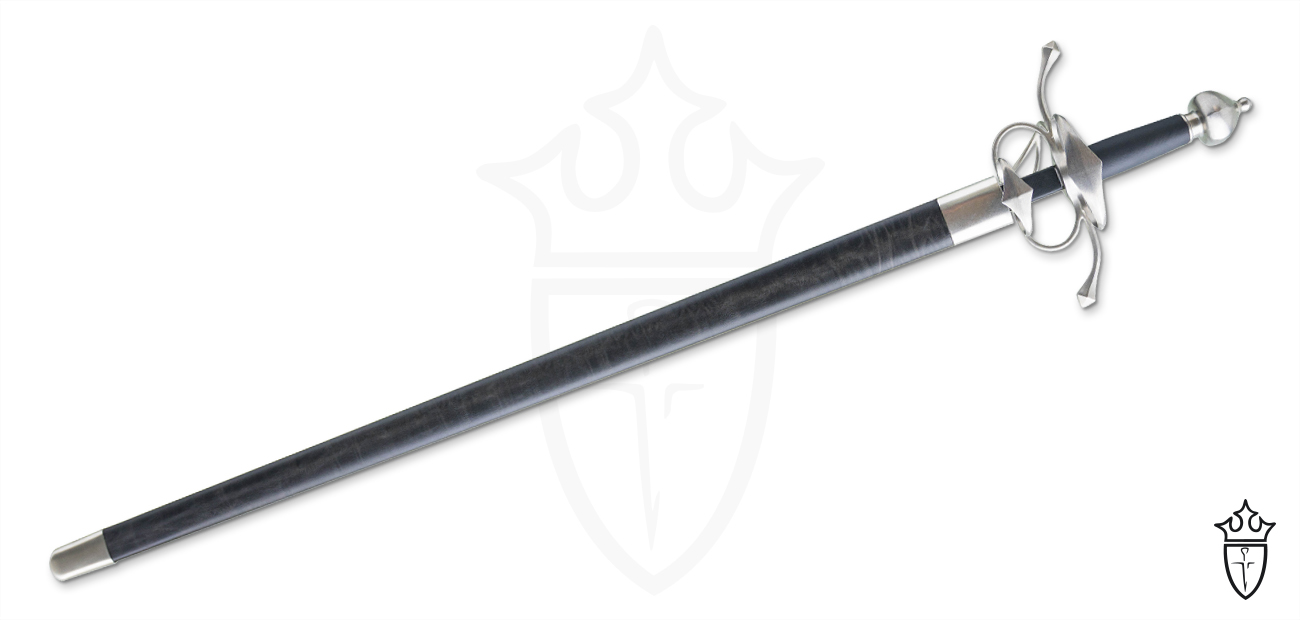
The Side Sword was a military sword of the 16th and 17th century Renaissance period that also achieved popularity among civilians, due to its relatively light weight and quickness. It also had an advantage over its contemporary, the rapier, in having the ability to cut efficiently as well as thrust. Based on an original German sword of this type, this sword is well balanced an feels exceptional in the hand. The “swept” hilt affords excellent hand protection and the blade geometry makes for outstanding performance in both the cut and the thrust.
Key Features:
• Forged High Carbon Steel Blade
• Based on an Original German Side Sword
• Leather Covered Scabbard Included
Specifications
Overall: 41"
Blade Length: 33"
Handle Length: 5 1/2"
Weight: 2lb 11oz
Point of Balance: 3 1/2"
Thickness at Guard: 5.5mm
Thickness at Tip: 2.5mm
Blade Steel: 5160
Handle Material: Leather
Specs will vary slightly from piece to piece.
0 of 0 reviews
Leave a review!
Share your experiences with other customers.
Login
No reviews found. Be the first to share your insights.
Manufacturerinformation (GPSR)
Swords and more GmbH
Liebigstrasse 2-20
22113 Hamburg
Deutschland
Switzerland, in the modern world, is famous for its neutrality. It
does not participate in war and has not done for over two centuries due
to the complexities of the Treaty of Paris. This has led some to
conclude that Switzerland has always been a neutral nation or that there
were no warriors in Swiss history. As countless armies on the receiving
end of Swiss blades discovered, nothing could be further from the
truth.During the Middle Ages soldiers went through a period of
evolution. While in centuries past soldiers were typically farmers,
peasants, or otherwise employed individuals temporarily wrapped around a
core of career warriors and nobles, the transition to feudalism and
castle warfare opened up significant possibilities for those who wished
to view war as a profession rather than a temporary divergence from
everyday life. Few countries could afford a standing army, so those who
wished to enter into a career of soldiering would often join a mercenary
troop that would be hired to act as (or supplement) a country’s own
military. Of these mercenary troops the Swiss Reisläufer were generally
regarded as one of the most fearsome and effective collection of
warriors in the world.The Reisläufer were employed in numerous
wars and countless battles across Europe from a time encompassing the
later Middle Ages well into the Enlightenment period. Their particular
tactics – including heavy use of polearms, phalanx formations, and
brute-force approach to infantry combat – allowed them to dominate on
the battlefield. As their polearms protected them from cavalry and their
training, armor, and large numbers often outmatched simple foot
soldiers they were frequently the deciding factor in a war. The British,
French, Dutch, and Spanish armies – to name a few – all would at one
time or another rely on the Reisläufer to win the day.While the
primary weapons of the Reisläufer would have been pikes, halberds, and
later in their existence early firearms, many of them also carried
two-handed, single-edged swords. The Swiss Sabre, or Schweizerdegen, was
popular in Switzerland during the High Middle Ages and especially with
those warriors of the Reisläufer. Unlike the “Schweizersäbel” – a modern
term coined in 1914 by antiquarian and curator Eduard Achilles Gessler
(1800 – 1947) of the Swiss National Museum – the Schweizerdegen was a
16th Century saber using among Swiss soldiers and mercenaries. It is
also the inspiration for this historically-based sword from Darksword
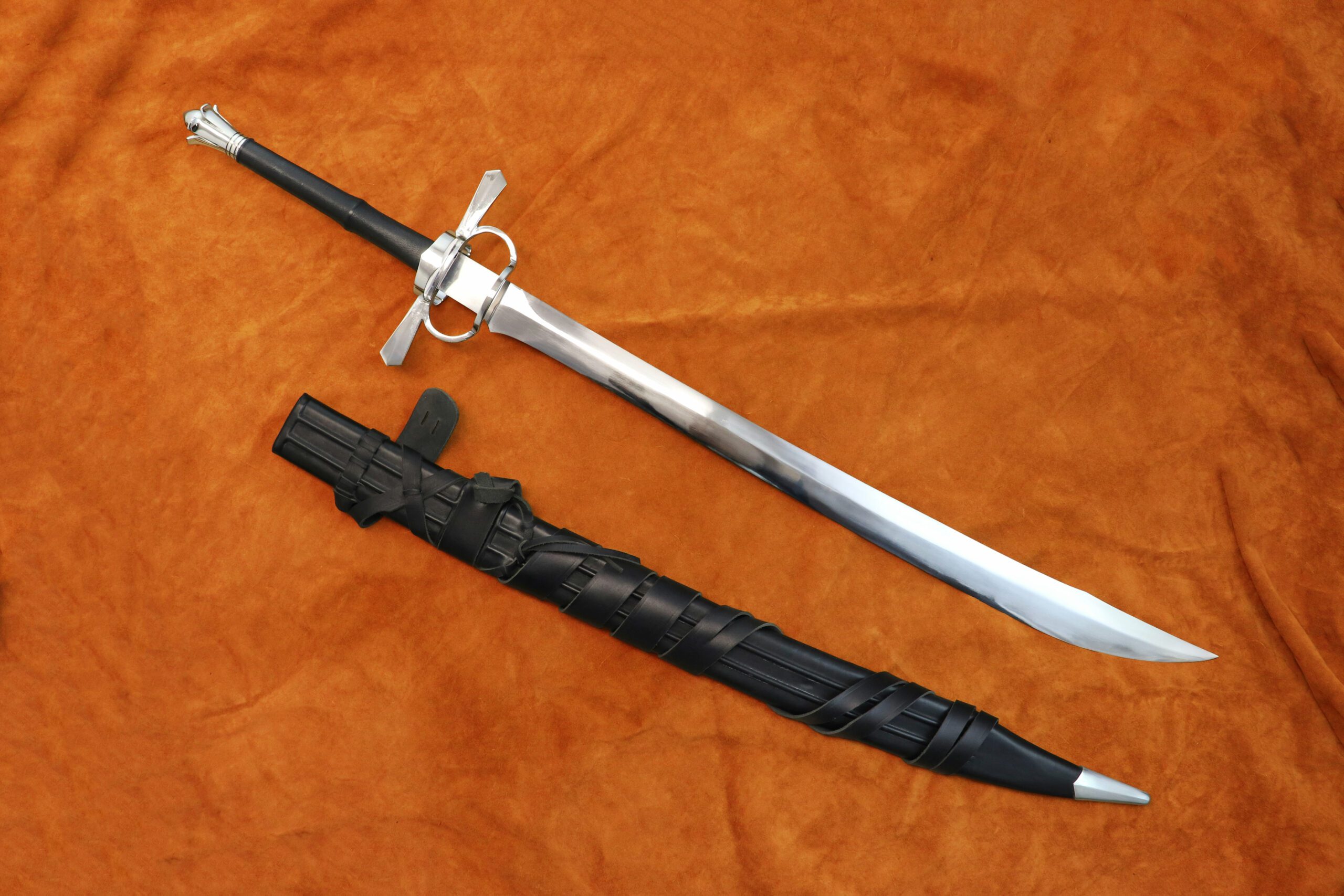
Armory.Like all Swiss Sabers, the Darksword Armory Ring Hilt
Swiss Saber has a single-edged, slightly curved blade. The tip of the
blade is clipped with a false edge extending back to the stiff, robust
spine that gives the blade its cutting strength and resilience. The
hilts of Swiss Sabers were of various designs with some plain, others
complex, with recurved quillions and rings and knuckle guards. By the
late 16th century, specialized hilt forms begin to emerge, often with
pommels shaped as a lion’s head, or plated with silver. This design has a
classically inspired renaissance-style ring-hilt, similar in form to
early side swords and the two-handed ring hilt swords that appeared more
frequently in the 16th century and following. This version of a Swiss
Saber has a unique crown pommel to differentiate it from similar modern
reproductions and to give it more of the renaissance character that the
ring hilt implies. If the Reisläufer are ever again needed, this sword
would serve them well – and would sure be a worthy member of your
household/mercenary troop as well.Blade: 5160 High Carbon Steel. Dual Tempered HRc 60
48-50 at the core
Total length: 46″
Blade length: 34″
Blade width at base: 2″
Weight: 3 lbs. 12 oz.
Please note:
The sword will be delivered only with the scabbard, the "matching belt" is not included but can be ordered for an extra charge.
€999.00*
Dieser Artikel hat eine Lieferfrist von ca. 4-6 Wochen.
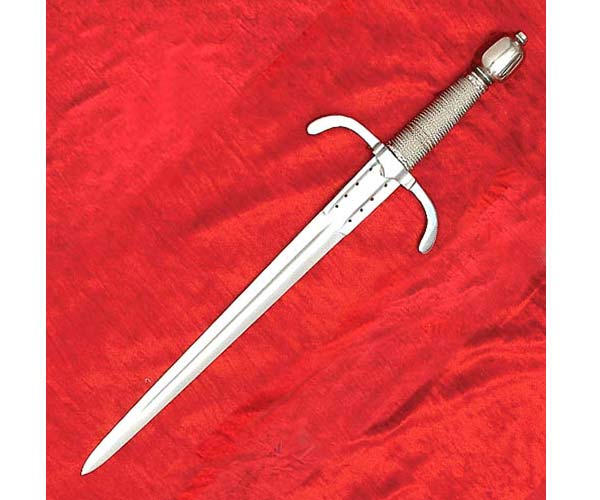
Circa 1600
During the 1600's a dagger was almost always carried by everyone and was used for two handed fighting with a sword or for when there was not room enough for a sword. The fullered blade has pierced work. Has a well-tempered 1095 high carbon steel blade. The pommel and guard are steel and the grip is wood wrapped in twisted steel wire for a very positive hold. Made by Windlass Steelcrafts, includes scabbard. Matching sword (#13815) available.
Details:
Overall: 49.21 cm
Blade: 33.97 cm long, 3.18 cm wide, 0.48 cm thick
Wt: 680.4 g
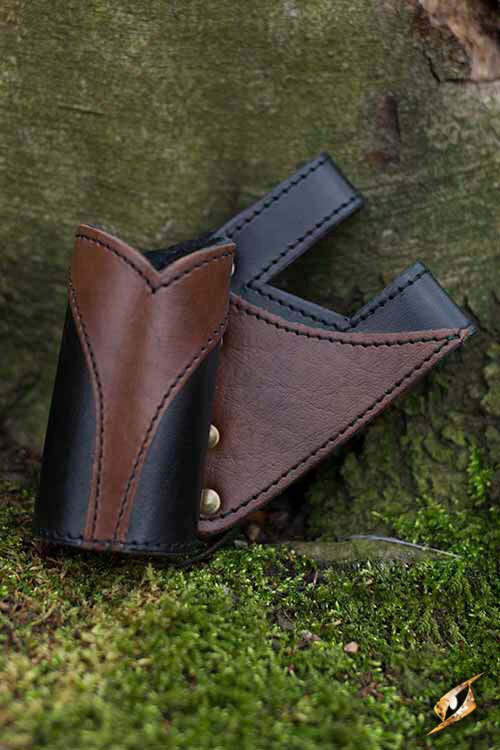
This Victory sword holder has been made of high quality black and brown split leather. It has been decorated with brass rivets and is carried on the left side.
€18.99*
Dieser Artikel hat eine Lieferfrist von ca. 10-14 Tagen.
Developed early in the 12th Century, the Great Helm became the mainstay of the medieval fighting man, and lasted for about 300 years. Worn over a mail coif and padding this helm has menacing, narrow eye slits for maximum protection. Made from 18 gauge steel.
€199.00*
Dieser Artikel hat eine Lieferfrist von ca. 3-4 Wochen.
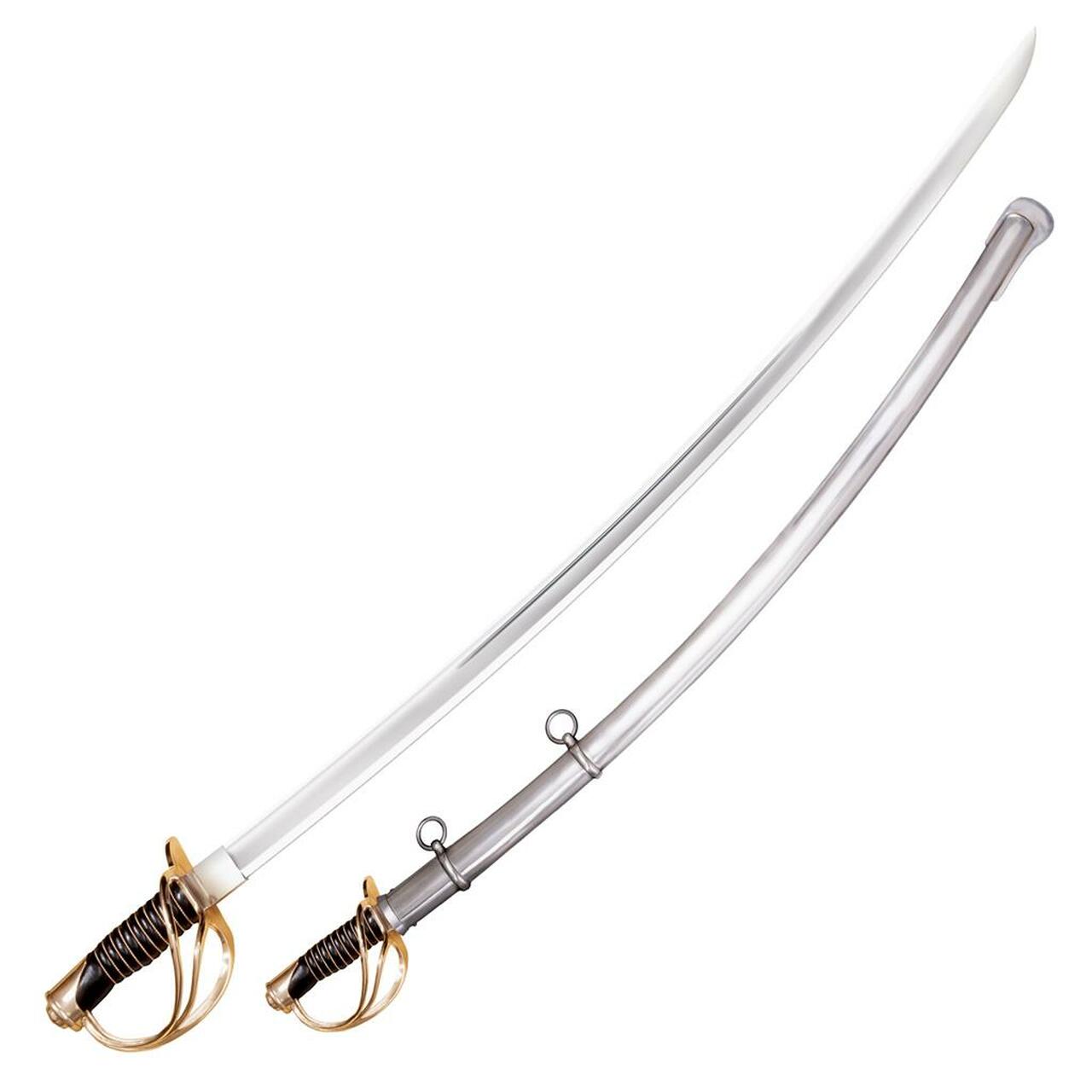
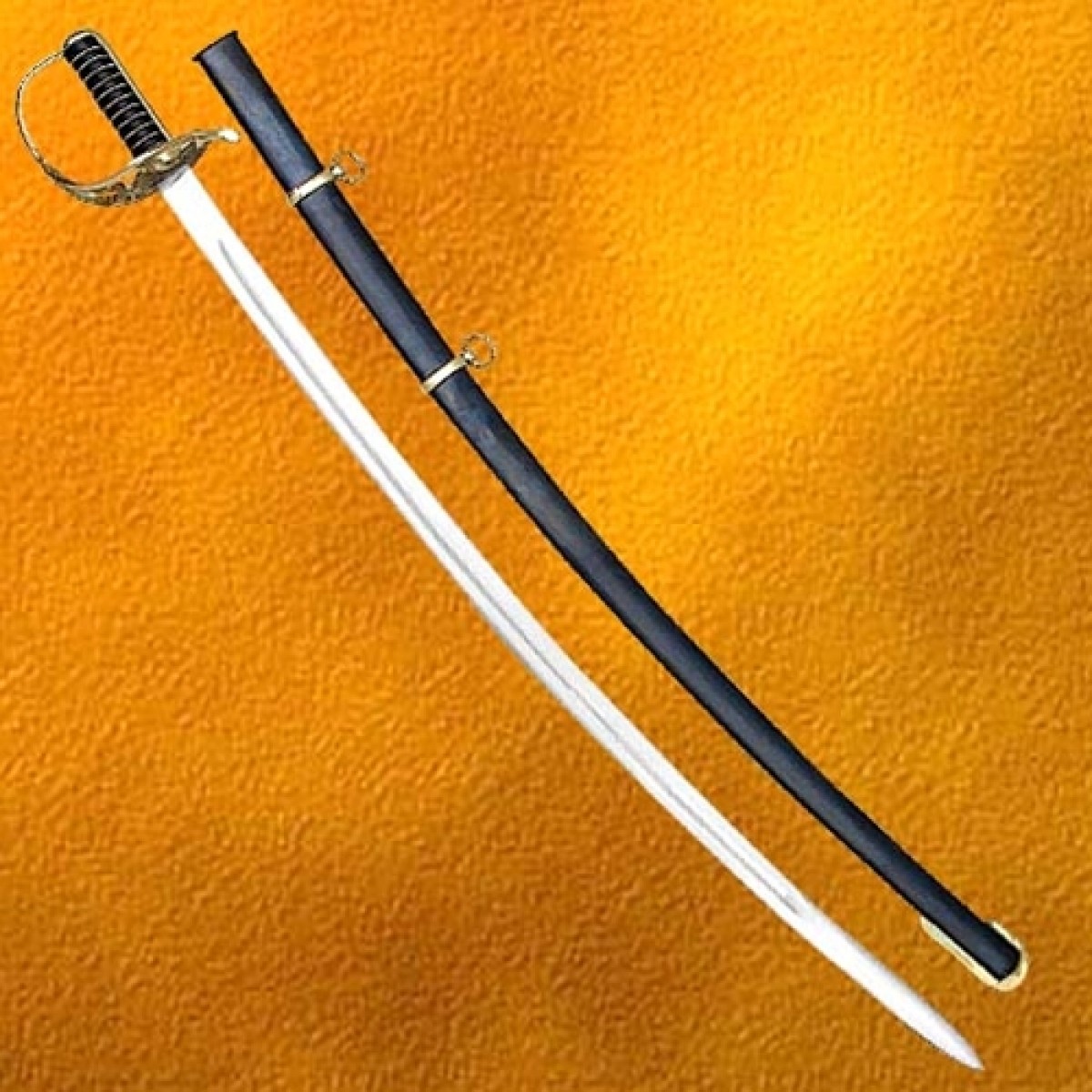
This fine saber has a 1065 high carbon steel blade with full tang and is well tempered. An authentic replica of the highest caliber. This historically accurate saber was well known as the Wrist Breaker. The model 1840 Cavalry Saber has a three branch brass guard, brass wire wrapped black leather grip, and comes with a steel scabbard. Made by Windlass Steelcrafts.
Key Features:
Features a 1065 High Carbon Steel Blade
Full Tang
Well Tempered
Historically Accurate Saber
This fine saber has a 1065 high carbon steel blade with full tang and is well tempered. Grip is black leather wrapped and twisted brass wire. A rare chance to own a unique piece of US wartime history. An authentic replica of the highest caliber.
Prior to the Civil War, Messrs. Sharp & Hamilton operated a farming implement company under the trade name of Nashville Plow Works. With the war looming, the owners converted their establishment into an armory. The Nashville Plow Works continued operations until April 1, 1862, when the city was taken by Federal troops.
This sword has a cast brass guard, with both CSA and Nashville Plow Works also cast in block letters on the underside of the guard. The pommel and back strap are of one piece and of brass. The scabbard is blackened steel with brass mounts.
Overall Length 39"
Blade Length 34"
Blade Width 1-1/8"
Blade Thickness 3/16"
Weight 1lb 12oz
Material 1065 High Carbon
€199.00*
Im Außenlager - in 5-7 Tagen bei Dir zu Hause
This website uses cookies to ensure the best experience possible. More information...