
10% discount on all Demon Slayer and Elden Ring products

Steel Greaves

€89.00*

this item is in stock

Product number: 70131
You get 89 bonus points for this order
Product information "Steel Greaves"
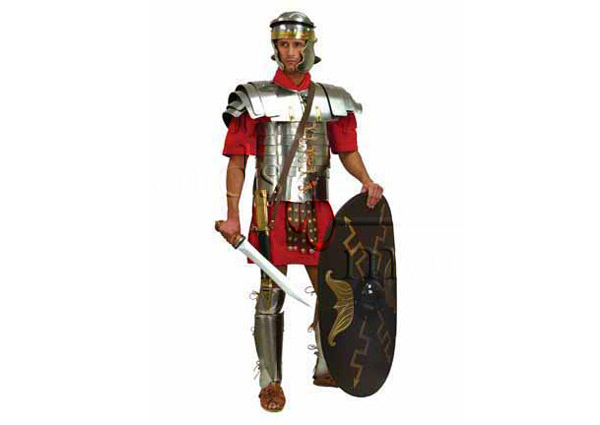
Greaves are designed to protect the lower leg from the cut of a sword or the vicious kicking that occurred during battle. Although worn by many Roman units, greaves were not worn by all. These replica steel greaves are based on patterns pictured in reliefs on Trajan's Column in Rome and feature an articulated knee piece for extra protection.

Details:
Length: 18 3/4"
Width: 8 3/4"
Bend: 5 1/2"

0 of 0 reviews

Leave a review!

Share your experiences with other customers.


Manufacturerinformation (GPSR)

Swords and more GmbH
Liebigstrasse 2-20
22113 Hamburg
Deutschland

0049 40 36164963
info@swords-and-more.com

Customers also bought
Roman longspear
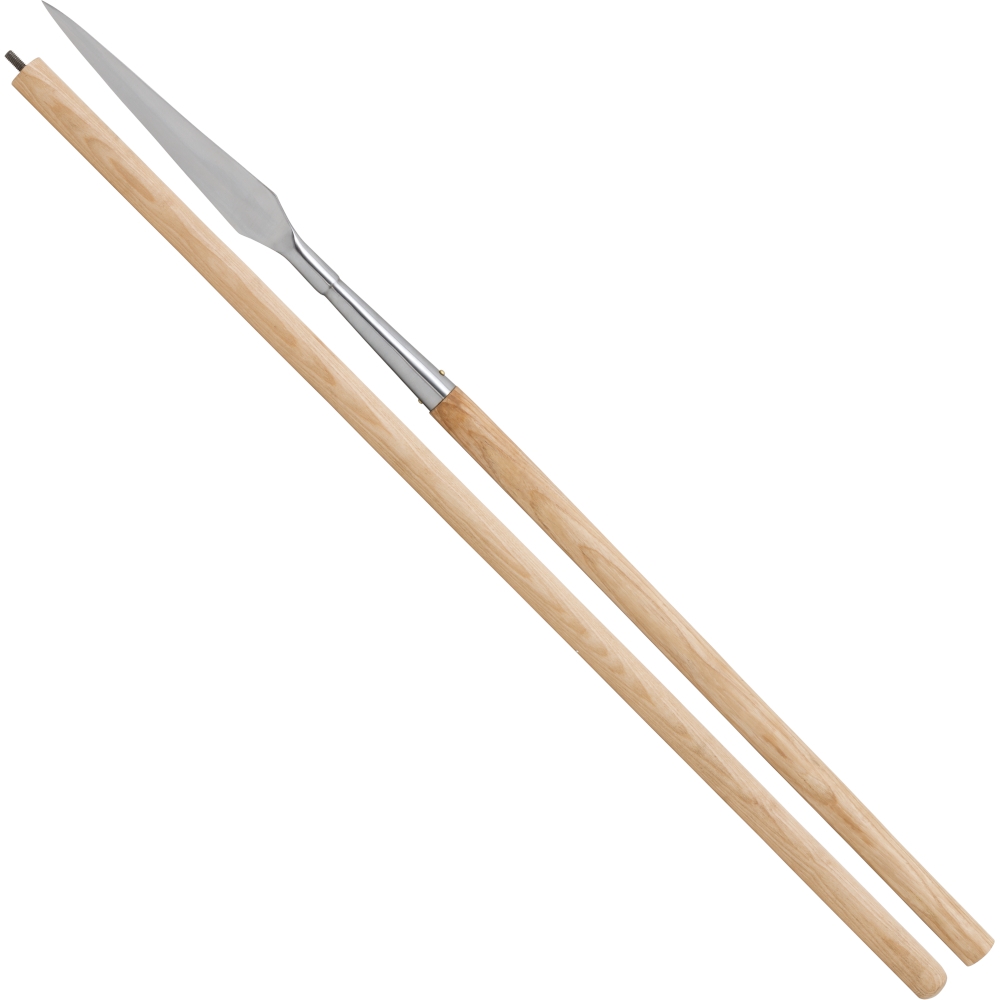
This sword comes in two parts, the wooden pole can be mounted. The total length is 230 cm. The spearhead is also available without a pole (13388). The blade is made of carbon steel and is not sharpened. Details: Length of the complete tip: 50 cm Length of blade: 30 cm Width (widest point): 5 cm

€89.90*

item is available on 01.10.2026 . preorder now

Norse Viking Axe
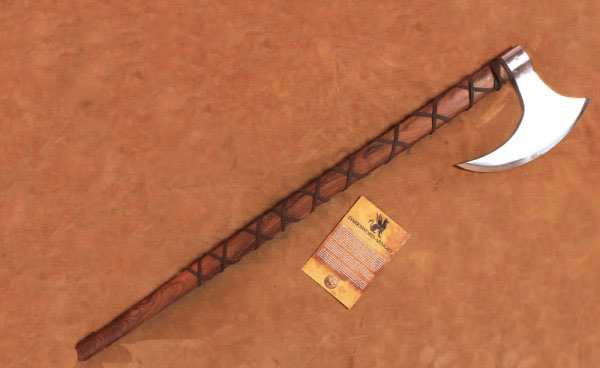
The axe is one of the first tools to be manufactured by humankind. The simplicity of its construction and its inherent versatility means that axes have been an integral part of every human culture.Axes however are associated to the Vikings more than any other group of warriors. Axes were a vital part of Viking life, as evidenced by archaeological digs at Viking sites. However, it's important to understand that the basis of Viking life was not raping and pillaging, but agriculture. Axes were an essential farming and household tool. As they did with all of their weapons, Vikings usually named their axes, often naming them after she-trolls. However, axes never had the same cultural significance to Viking warriors as swords and spears did. The Viking axe was not a sacred weapon but an immensely practical one; something that could be for combat but was most commonly called on for simple domestic or agricultural duties. In war however, the Viking axe was a devastating weapons in hand-to-hand combat, capable of splitting a man's skull, or thrown against an opponent’s shield.Around the 10th century, the Vikings developed the weapon known as the Dane Axe. This is that huge, terrifying battle axe that we commonly associate with Vikings. Its shaft could be as long as six feet, and the head had a cutting surface of up to twelve inches. The head of the Dane Axe was extremely thin, with thicknesses as narrow as 2mm along the edge of the blade. With a lightweight design, these were easy to swing and provided a wide radius of destruction with little risk to the axe getting stuck, although they were not as useful in hand-to-hand combat as the smaller hand axe. Although associated with Vikings - the Dane Axe still appears on the state coat of arms of Norway - the Dane Axe was actually most popular in England, where it continued to be used into the 16th century, long after the influence of the Vikings had waned. Details: Total length: approx. 105.41 cm Ax head length: approx. 24.1 cm Ax head width: approx. 34.29 cm Weight: about 1769g

€349.00*

Dieser Artikel hat eine Lieferfrist von ca. 4-6 Wochen.

Roman Belt with Hanging Leather Strips
Primarily ornamental, this Roman soldier's belt, called a Cinculum Militaire, comprises of a studded leather belt with varying numbers of hanging leather strips and sometimes metal rings. This belt is based on one that was popular about 100 A.D. The belt will accommodate up to a size 46" waist.

€89.00*

Dieser Artikel hat eine Lieferfrist von ca. 3-4 Wochen.