
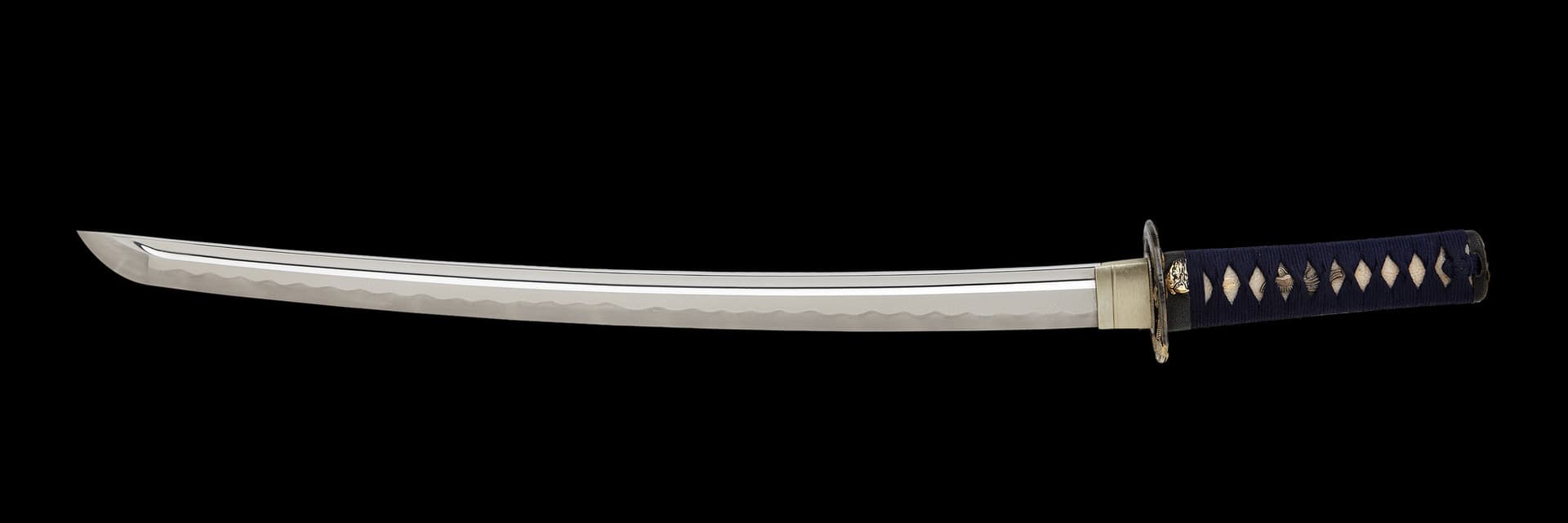
Item No.: 11884

Manufacturer: Dynasty Forge
Daimyo FF Wakizashi Hi 50.8 cm Gold Eagle
No reviews
999,00 €1.599,00 €
incl. 19% VAT, plus
⭐ You receive 999 bonus points for this order
No sale to persons under 18
This item is in stock
ATTENTION: Age verification required!
This item may only be sold to persons aged 18 and over.Manage age verification →
An heirloom grade classic Samurai Wakizashi (companion sword) forged from folded 1095/1080/1060 carbon steel. The blade is differentially clay-tempered to harden the edge will retaining a softer spine to increase resistance to shock. This blade is given our Daimyo hand-polish, taking over 40 hours on Japanese natural stones to provide a mirror finish that provides insight into the Hada and a distinct Hadori Hamon. Matched with an intricately detailed Gold Eagle tsuba (based on an antique in the Boston Museum of Fine Arts collection) and blue Japanese silk Ito. this sword is authentically Japanese while having an American character. The centerpiece of any collection, this sword represents our smiths' best work with modern steel. Pairs perfectly with our Daimyo Forge-Folded Katana to complete a Daisho.
Details:
Blade length (in/cm): 20/50.8
Overall length (in/cm): 27.5/69.85
Weight (lbs/kg): 1.375/0.63
Steel: Forge Folded Tri-Steel
Polish: Hand
Temper: Differential Clay-tempered
Bo-hi: Yes
Tsuba: Gold Eagle
Fuchi-Kashira: Gold Eagle
Ito: Blue silk
Saya: Black gloss
Details:
Blade length (in/cm): 20/50.8
Overall length (in/cm): 27.5/69.85
Weight (lbs/kg): 1.375/0.63
Steel: Forge Folded Tri-Steel
Polish: Hand
Temper: Differential Clay-tempered
Bo-hi: Yes
Tsuba: Gold Eagle
Fuchi-Kashira: Gold Eagle
Ito: Blue silk
Saya: Black gloss
- Item No.
- 11884
- Manufacturer
- Dynasty Forge
- Weight
- 1 kg
- Delivery time
- This item is in stock
Shipping costs
| Country | Order value under €50 | Order value from €50 |
|---|---|---|
| 🇩🇪Germany | 6,00 € | 8,00 € |
| 🇦🇹Austria | 10,00 € | 12,00 € |
| 🇨🇭Switzerland | 10,00 € | 12,00 € |
| 🇧🇪Belgium | 8,00 € | 11,00 € |
| 🇧🇬Bulgaria | 15,00 € | 50,00 € |
| 🇩🇰Denmark | 10,00 € | 12,00 € |
| 🇪🇪Estonia | 22,00 € | 25,00 € |
| 🇫🇮Finland | 12,00 € | 27,00 € |
| 🇫🇷France | 14,00 € | 17,00 € |
| 🇬🇷Greece | 10,00 € | 35,00 € |
| 🇮🇪Ireland | 12,00 € | 25,00 € |
| 🇮🇹Italy | 10,00 € | 17,00 € |
| 🇭🇷Croatia | 10,00 € | 50,00 € |
| 🇱🇻Latvia | 10,00 € | 25,00 € |
| 🇱🇮Liechtenstein | 10,00 € | 25,00 € |
| 🇱🇹Lithuania | 10,00 € | 25,00 € |
| 🇱🇺Luxembourg | 10,00 € | 12,00 € |
| 🇲🇹Malta | 10,00 € | 50,00 € |
| 🇳🇱Netherlands | 8,00 € | 10,00 € |
| 🇳🇴Norway | 10,00 € | 27,00 € |
| 🇵🇱Poland | 12,00 € | 20,00 € |
| 🇵🇹Portugal | 10,00 € | 25,00 € |
| 🇷🇴Romania | 10,00 € | 50,00 € |
| 🇸🇪Sweden | 10,00 € | 20,00 € |
| 🇸🇰Slovakia | 12,00 € | 18,00 € |
| 🇸🇮Slovenia | 13,00 € | 18,00 € |
| 🇪🇸Spain | 12,00 € | 23,00 € |
| 🇨🇿Czech Republic | 13,00 € | 17,00 € |
| 🇹🇷Turkey | 30,00 € | 40,00 € |
| 🇭🇺Hungary | 12,00 € | 22,00 € |
| 🇺🇸USA | 50,00 € | 50,00 € |
| 🇨🇾Cyprus | 20,00 € | 50,00 € |
| Other countries (worldwide) | 10,00 € | 40,00 € |
All prices incl. statutory VAT. Shipping within Germany via GLS or DHL.
Payment methods





 PrepaymentCash on delivery
Loading reviews...
Information pursuant to the EU General Product Safety Regulation (GPSR 2023/988).
Manufacturer
Swords and more GmbHSwords and more GmbH
Liebigstrasse 2-20
22113 Hamburg
Deutschland
Email: info@swords-and-more.com
Phone: 0049 40 36164963
Responsible dealer
Swords and more GmbH
Liebigstraße 2-20, 22113 Hamburg, Germany
Age restriction: Sold only to persons aged 18 and over. Before your first order, anage verificationis required.
Other customers also bought
.jpg&w=1920&q=75) In Stock
In StockSwords and more
Maintenance Kit
22,90 €

The Craft of the japanese sword
40,00 €
 In Stock18+
United Cutlery
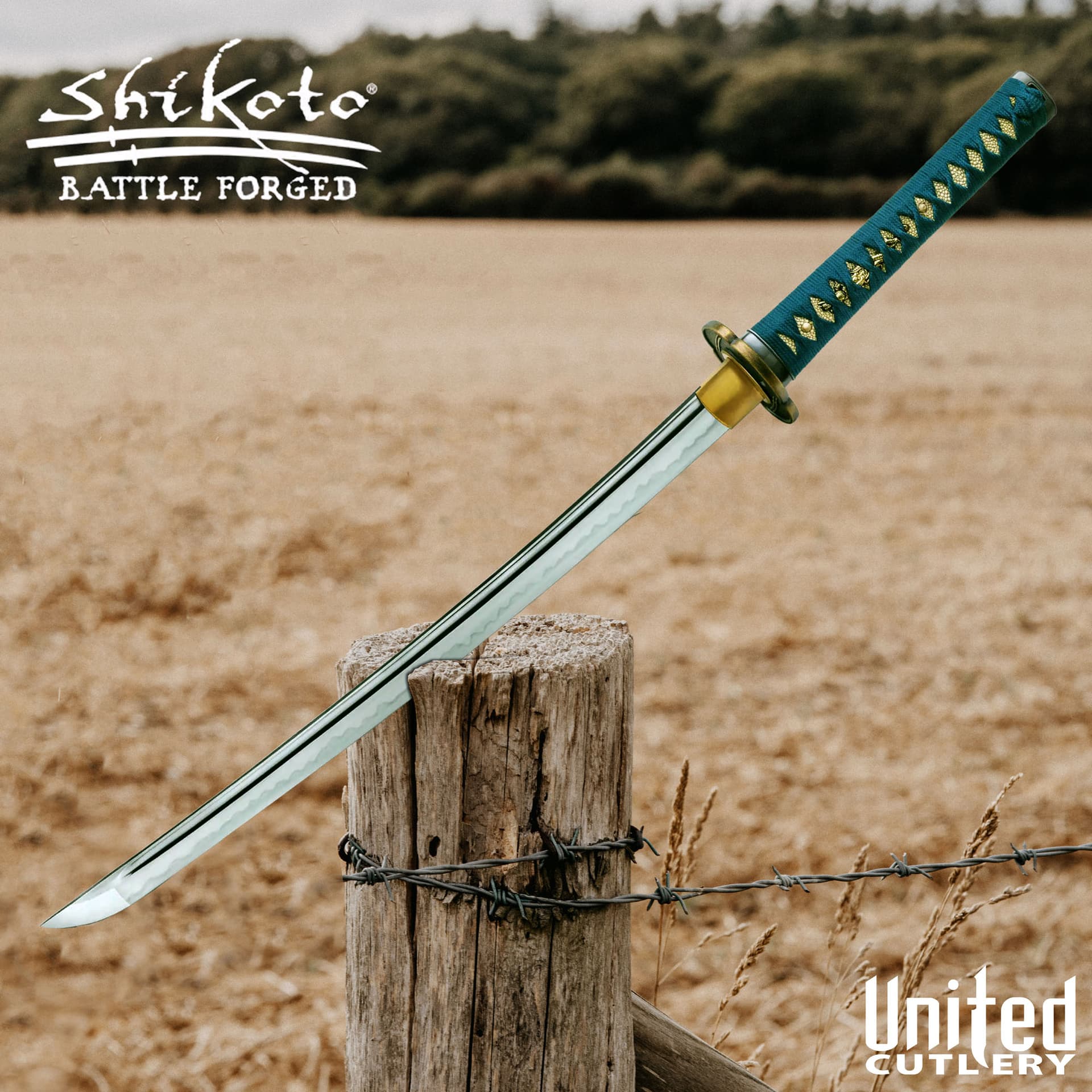
Shikoto Hammer-Forged Longquan Master Teal Wakizashi
399,00 €
 18+
18+Dynasty Forge
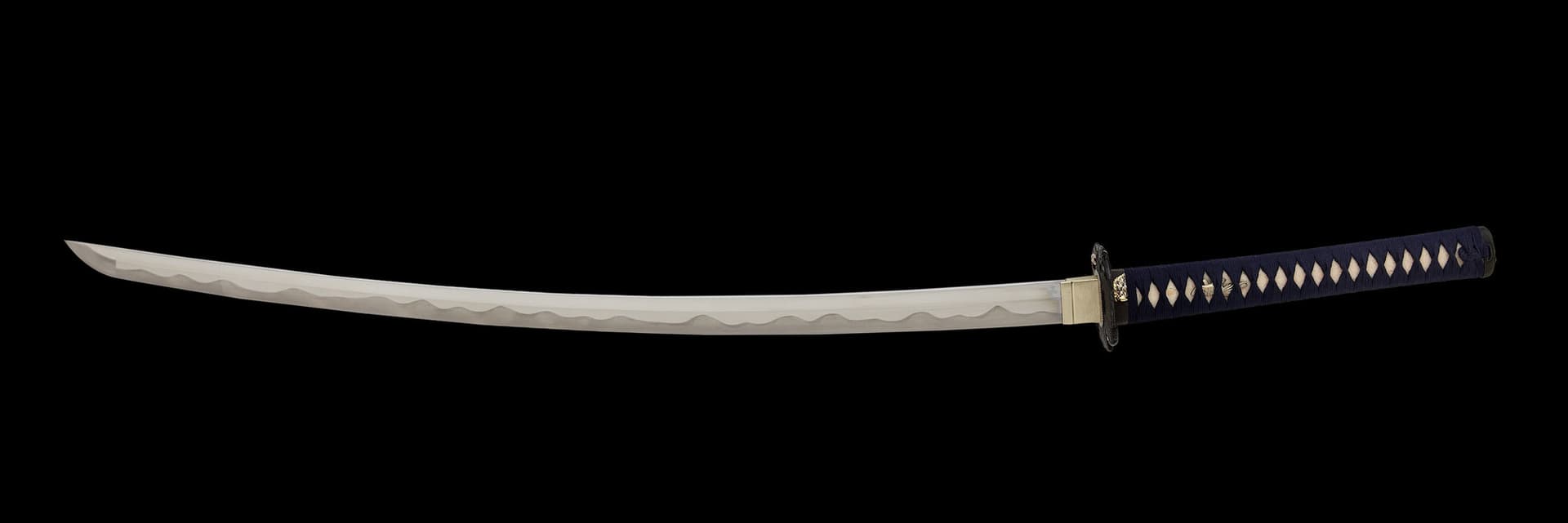
Daimyo FF Katana 73.66 cm Gold Eagle
999,00 €2.199,00 €
 In Stock18+
Dynasty Forge
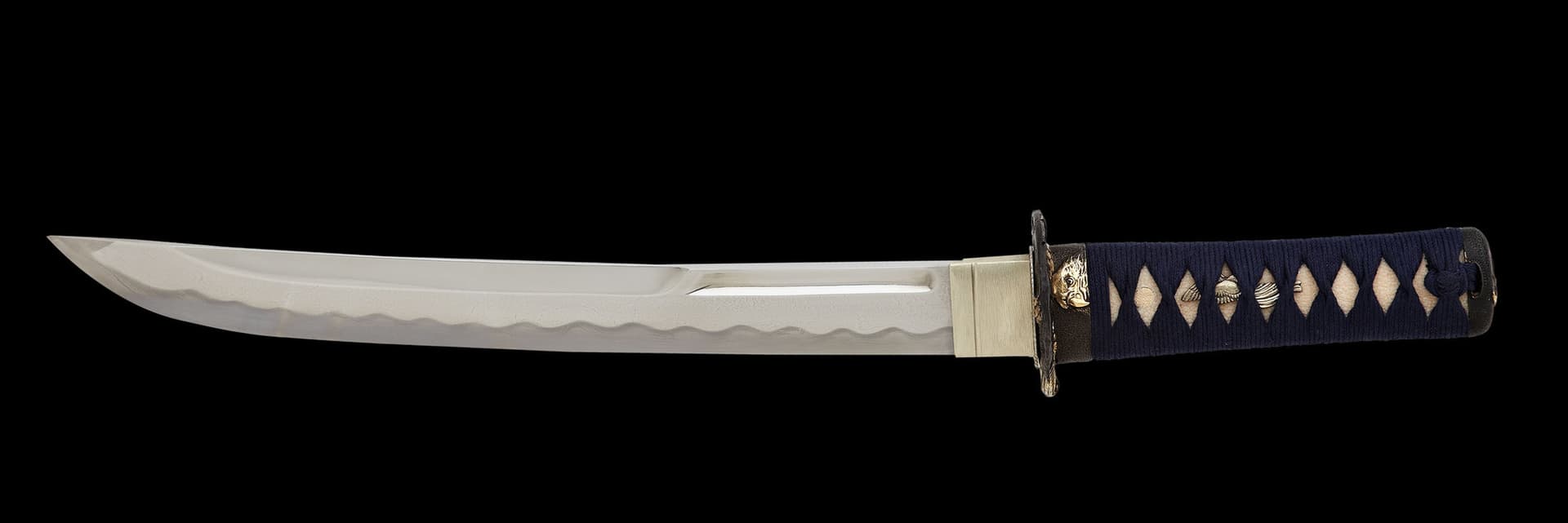
Daimyo FF Tanto 31,12 cm Gold Eagle
799,00 €1.399,00 €
 In Stock18+
Swords and more
Nodachi sword - handforged & folded, Set - Blood Damascus Edition
299,00 €