
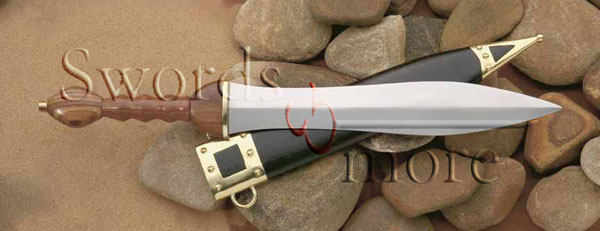
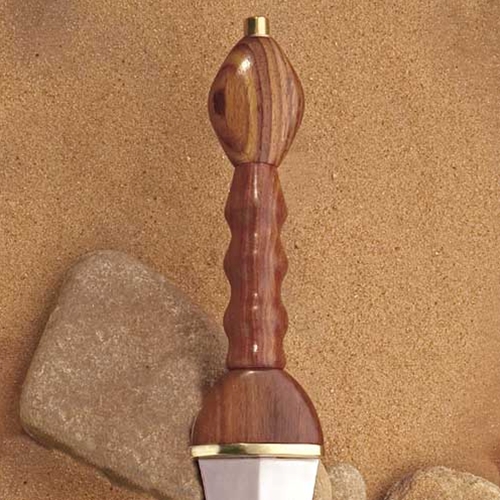
The distinct shape of the Pugio blade was excellent for a close quarters fight, and was used throughout the legions. Although swords and knives were generally not worn by civilians within the boundaries of the \"Pax Romana\", barbarians and bandits were certainly to be found in the outlands, and a merchant or trader best go armed. No doubt many an old legionnaire must have found it easier to keep his balance with the familiar weight on his hip as he worked his farm in new won territory. A wood hilt is paired with a fully tempered high carbon steel blade. Comes complete with a wood scabbard covered in leather with brass parts. Based on remains in the British Museum.
Details
Total length 48,9 cm
Blade length 31,12 cm
Blade width 5,4 cm
Blade thickness 0,4 cm
Weight 0,4 kg
1 of 1 reviews
5 out of 5 stars
Leave a review!
Share your experiences with other customers.
Login
March 23, 2015 13:12
Sehr formschöner Dolch, liegt gut in der Hand und ist auch sehr gut verarbeitet.
Auch die mitgelieferte Dolchscheide hat sehr schön gemachte Messingbeschläge.
Manufacturerinformation (GPSR)
Swords and more GmbH
Liebigstrasse 2-20
22113 Hamburg
Deutschland
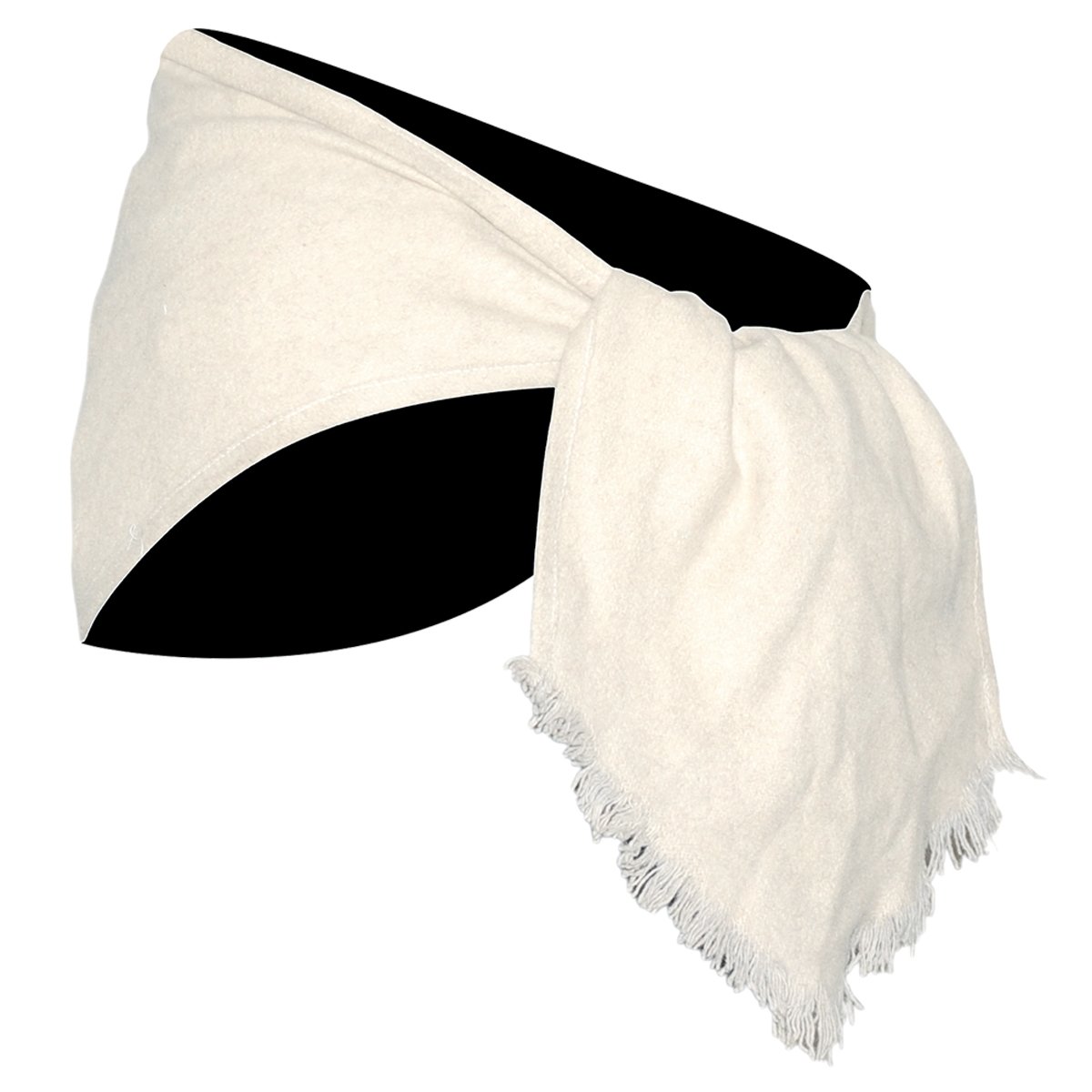
Roman gladiators subligaculum, wool. 1st. c. BCE - 3rd c CE. Made of Wool (Minimum Wool Content 85% Guaranteed).
Size Standard
Length 120cm
Waist 95cm
Bottom 27,5cm
Fringles Length 27,5cm
Upper to centre 52,5cm
Colour Natural
€29.91*
Dieser Artikel hat eine Lieferfrist von ca. 6-8 Wochen.
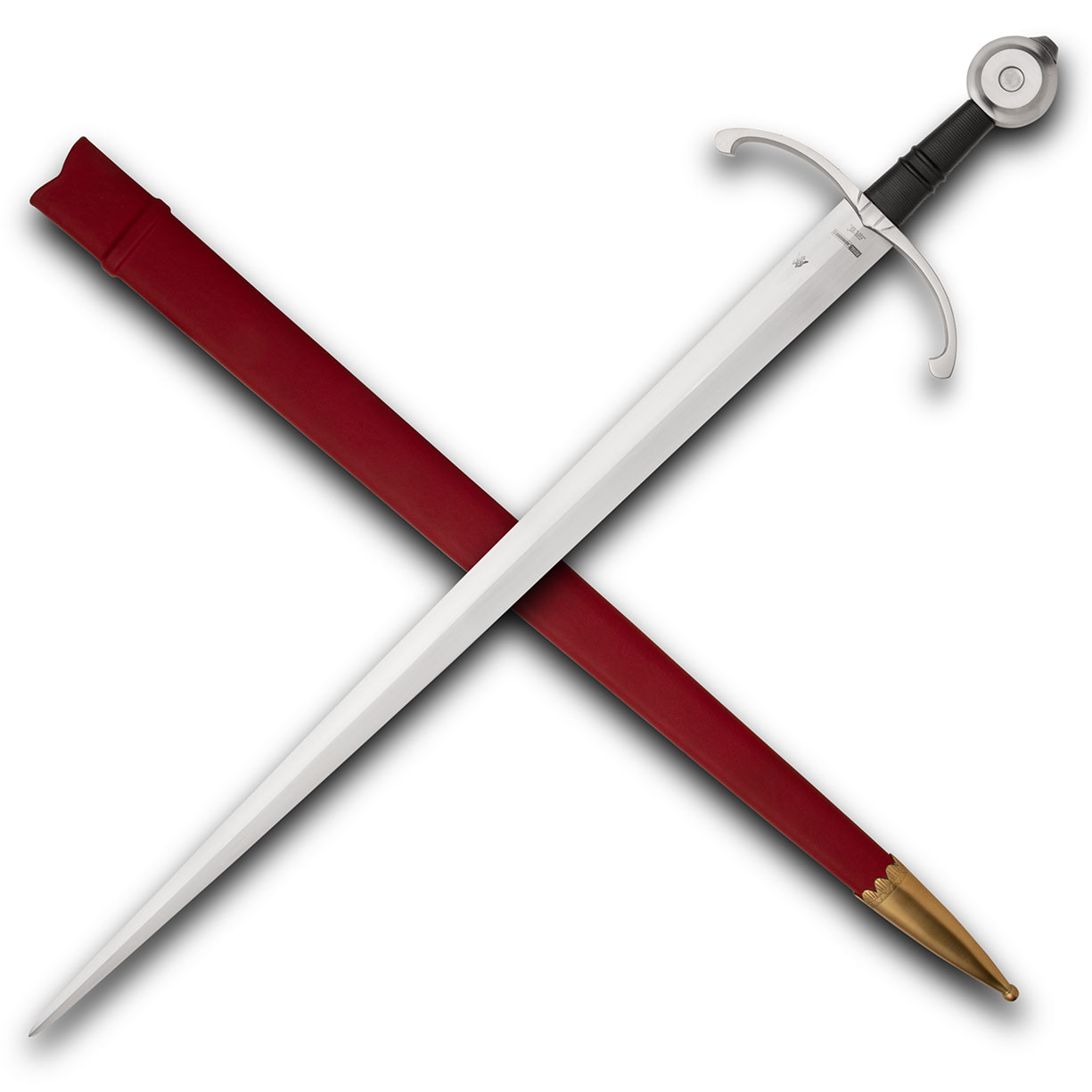
This arming sword in the Royal Armouries Collection dates to the late-15th century and is likely to be of English provenance.
This type of sword is a medium-to-high status sidearm of the late-15th century and into the early 16th century, and would have been worn both with and without armour. It would have been a knightly backup weapon, used in combat both on foot and mounted.
This sword shares some obvious similarities with the Westminster Abbey sword, which has been long associated with Henry V (but now believed to be from Henry VII's funeral achievements). It also shares a number of close similarities with other swords from English churches, and from representations of swords on English funeral effigies and brasses. Due to the state of preservation, it has been suggested that this sword may indeed have been taken from an English church monument in past centuries, where it was likely originally deposited in the late-15th century.
Our replica is a precise, faithful replica, manufactured traditionally in very similar ways to the original. It features a robust cut and thrust Oakeshott Type XVIII blade of just over 30 inches, long curved quillons with characteristic terminals, short grip and prominent solid wheel pommel. The original has some unusual floral engraving at the base of the blade, which we have not replicated, because unfortunately on the original it is too damaged to reproduce with any certainty.
The sheath is made with a wood body and covered with leather. The tip is reinforced with a brass chape that features ornate cut-outs and an acorn tip. At the throat, the leather extends upward and covers part of the guard at the ricasso.
Made by Windlass Steelcrafts, the original can be seen in the Royal Armouries Collection, Object Number IX.1426.
Includes a certificate of authenticity on heavy stock
SPECIFICATIONS:
Overall Length: 37-1/4"
Blade Length: 30-5/8"
Blade Width at Ricasso: 1-3/4"
Blade Distal Taper: 1/32"
Weight: 2 lbs, 13 oz
Material: 1075 high carbon steel
Edge: Double-edged with bevels, unsharpened
Balance Point: 3-11/16" from guard
Circa 100
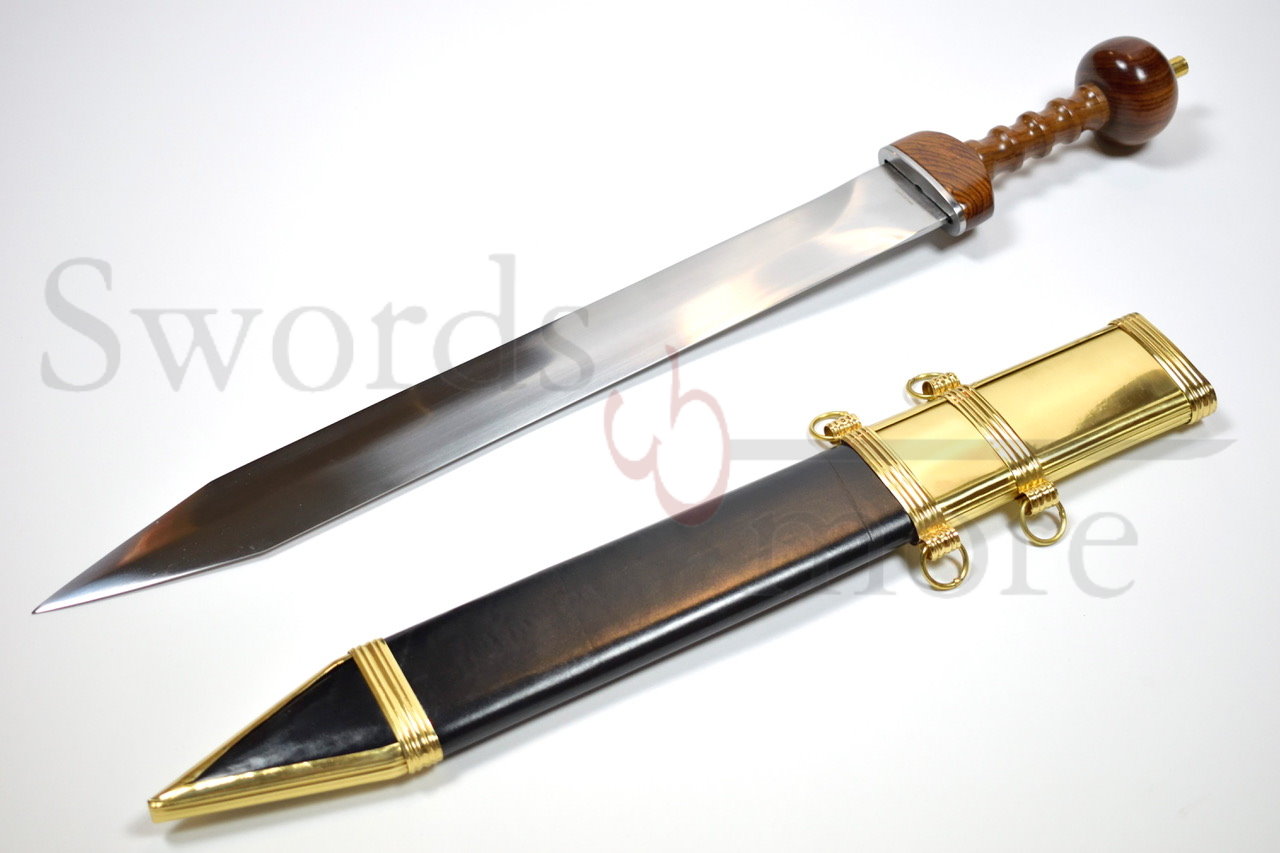
The Roman Army's approach to warfare was direct and pragmatic. It chose the Gladius as its principal sidearm because it was practical and efficient and excelled in any close combat situation. The later versions (we offer you the Pompeii) were not waisted and had a shorter point but were just as effective and easier to make. This is the sword that conquered most of the known world. Its blade is made of high carbon steel. The Pompeii Pattern Gladius also features a maple handle
Details:
Total length: 28"
Blade size: 19 1/2" long, 2" wide
Weight: 2 lbs. 6 oz.
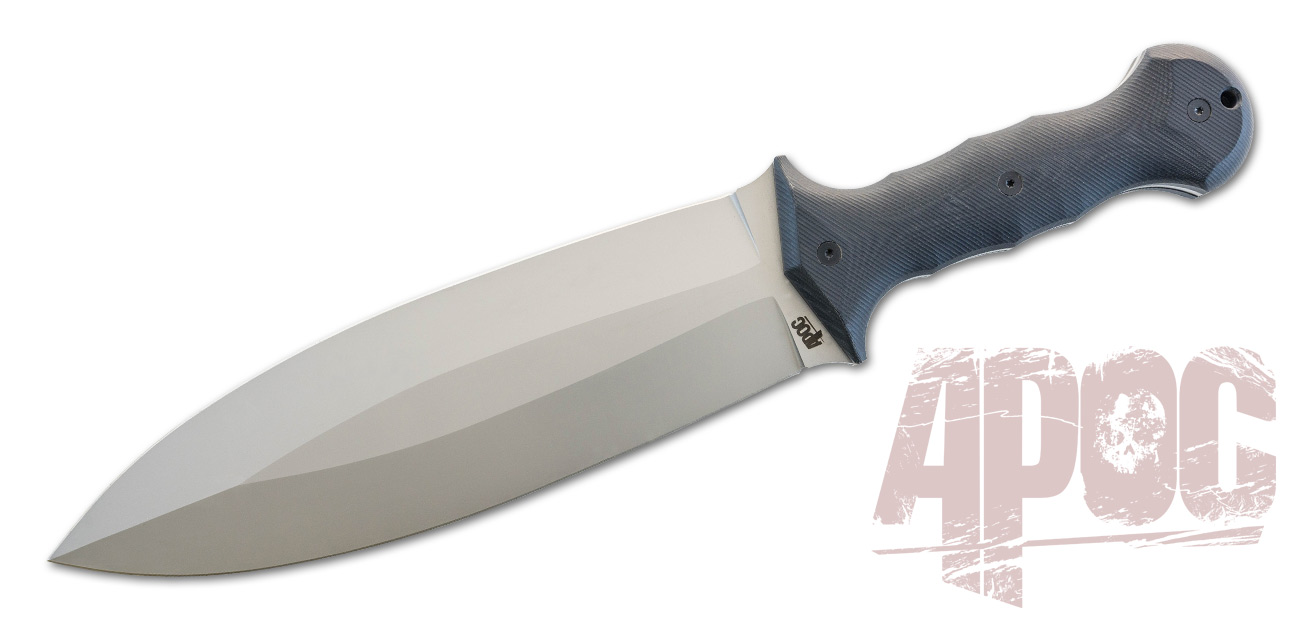
Knife designer and maker Mike Wallace brings his renowned practical, sensible and functional designs to his collection of APOC knives. Whether you’re into bushcraft and survival blades, or hardcore tactical and battlefield ready blades, the Wallace APOC collection has something for everyone. Wallace shares APOC’s love of bringing something from the past back to the future. The Wallace Smatchet does just that, paying true homage to the historical knife used by British Armed Forces during World War II while advancing its designed and intended use with modern upgrades.
Being called upon for duties that range from hatchet to shovel, the 9 5/8" blade is ready for anything. Made with titanium coated D2 steel this knife’s unique shape allows for versatility of function from thrusts, cuts, chops, and piercing. The 5mm thick, full tang construction absorbs the transfer of energy with every task, while the D2 steel holds a magnificent edge. The G10 handle slabs are rounded to the tang and the notched handle permits a comfortable and secure grip. And for those extreme situations, there is a lanyard hole to help safeguard your swing. The Kydex belt sheath is Molle compatible with a simple snap release.
Key Features:
Designed by Mike Wallace
9 5/8" Titanium Coated D2 blade
G10 Handle Slabs
Specifications
Overall: 15 1/2"
Blade Length: 9 5/8"
Handle Length: 6"
Weight: 1 lb 10oz
Thickness at Guard: 5mm
Thickness at Tip: 1mm
Blade Steel: D2
Handle Material: G10
Specs will vary slightly from piece to piece.
€229.00*
Im Außenlager, Langstreckenversand - in 12-14 Tagen bei Dir zu Hause
This website uses cookies to ensure the best experience possible. More information...