
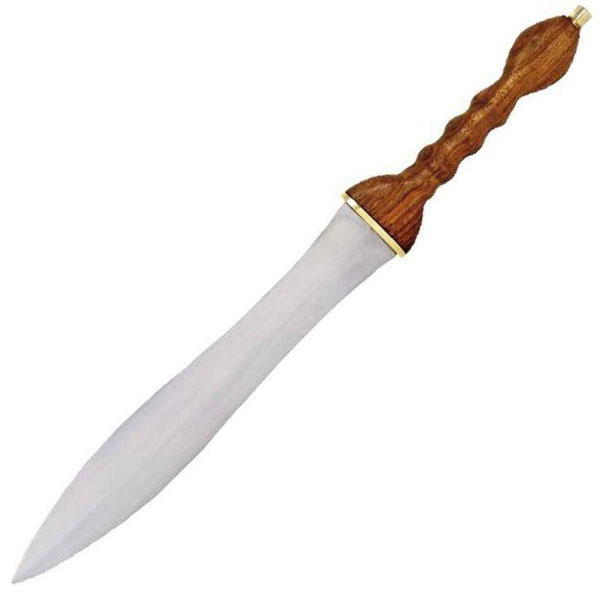
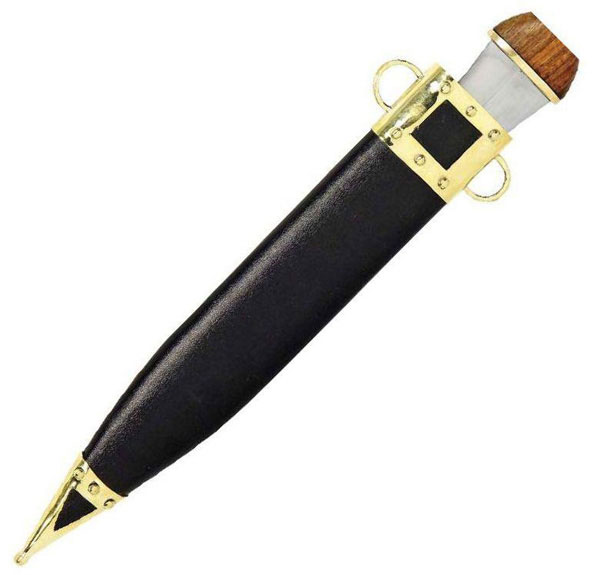
It was worn by the Roman legions as a secondary weapon.
The blade is forged from carbon steel.
The handle is made of wood.
The sheath features a leather cover with brass fittings.
Details:
Overall length: approx. 54 cm
Blade length: approx. 31 cm
Blade Material: Carbon Steel
Handle Material: Wood
1 of 1 reviews
5 out of 5 stars
Leave a review!
Share your experiences with other customers.
Login
June 10, 2013 09:01
Gutes Preis- Leistungsverhältnis. Muss noch etwas geschärft werden. Ansonsten sehr dekorativ und gutes Material.
Manufacturerinformation (GPSR)
Haller Stahlwarenhaus GmbH
Am Gartennest 1
74544 Michelbach/Bilz
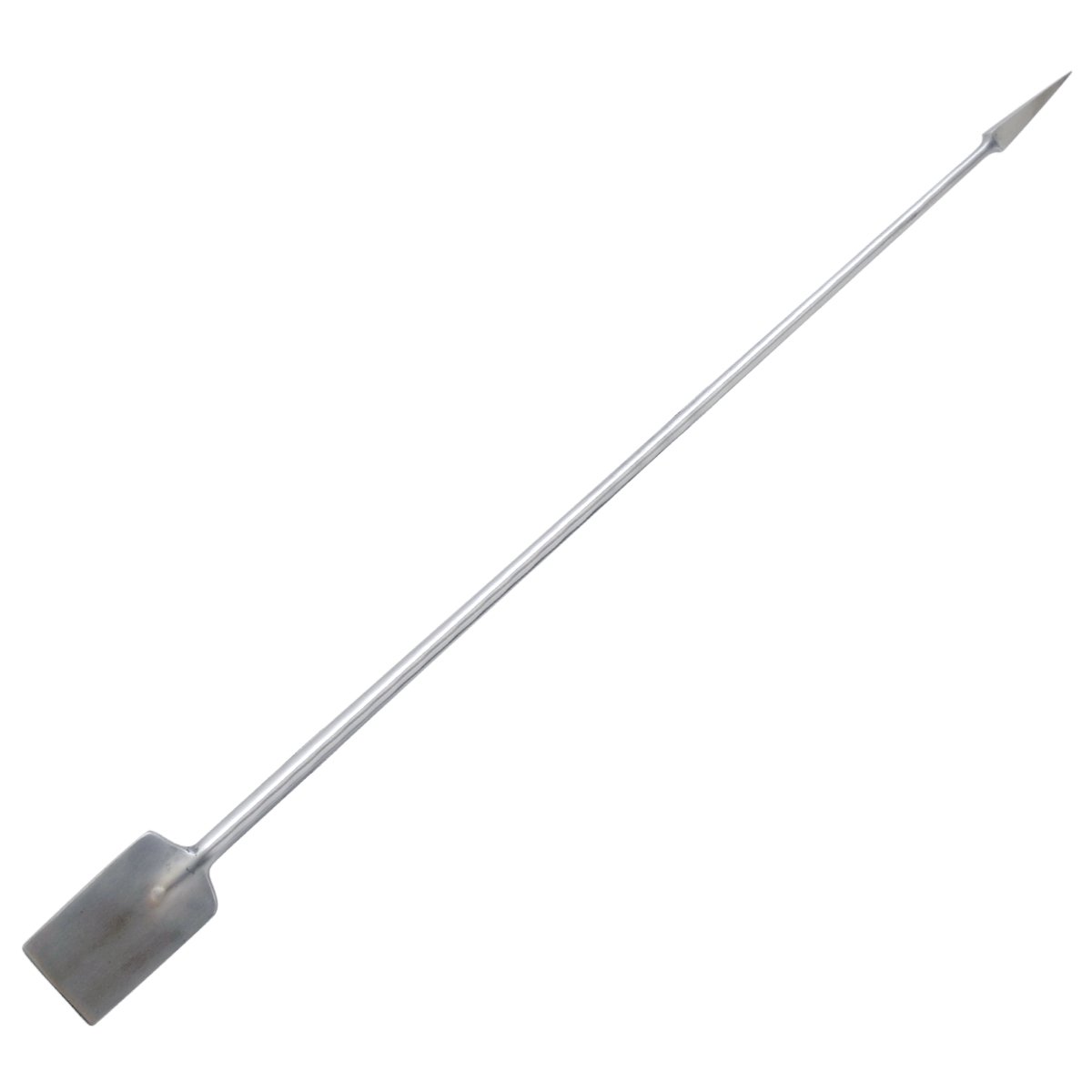
Get Dressed for Battle offers these hand-forged Pilum heads from Spain (Renieblas & Numantia). The pilum heads are supplied without the two holes, in order to be able to attach a self-made shaft more easily.
€39.90*
Dieser Artikel hat eine Lieferfrist von ca. 6-8 Wochen.
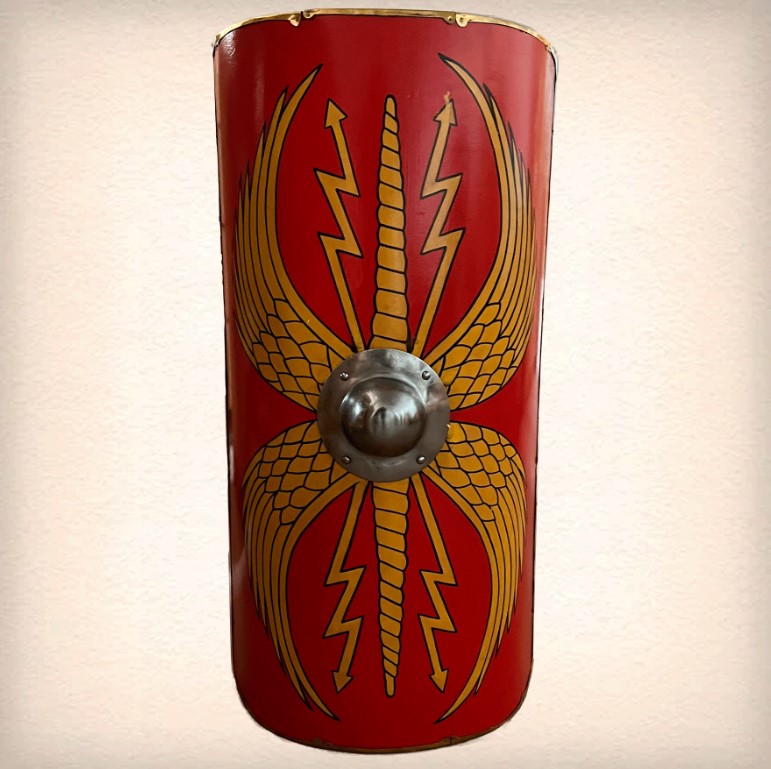
The Scutum was the iconic large Roman shield held by the soldiers in a Roman legion.While oval and circular shields were used in the Roman military by different members of the armed forces and at varying times during the entire period of ancient Rome, the curved, rectangular scutum was the primary protective shield used by the legionaries during the height of Rome's military.A scutum was typically red in color, as red was the color of the Roman god of war, Mars. It was decorated with an iconic image such as a winged eagle to represent victory and lightning bolts, the scuta (scutum) provided essential protection and were a vital reason for the military successes of ancient Rome.The curved design, combined with the umbo (the little circular piece in the center of the shield), helped to deflect blows much more effectively and the slightly curved edges could overlap with the shields of the legionaries on either side. This provided almost complete protection against enemy blows for those on the front line, and this style of fighting in formation in close quarter combat, using the gladius sword to thrust forward, become the classic fighting style for legionaries of the later Republican period and for most of the Imperial period.Reconstruction of a so-called scutum, the typical shield of the Roman legionaries during the Roman Empire.This shield is made of wood and is hand painted. The edge is protected with a brass reinforcement. The center of the shield is made of metal. The shield is reinforced at the rear with thin strips of wood. The handle is located inside the umbo.
SPECIFICATIONS:
Scutum made of wood and painted by hand
Rim with brass reinforcement
Center or umbo made of metal with rear handle
Rear wooden reinforcement
Measurements: 107 x 55 cm (Height x Width) Bending Radius: 23 cm
Weight: 4.300 g
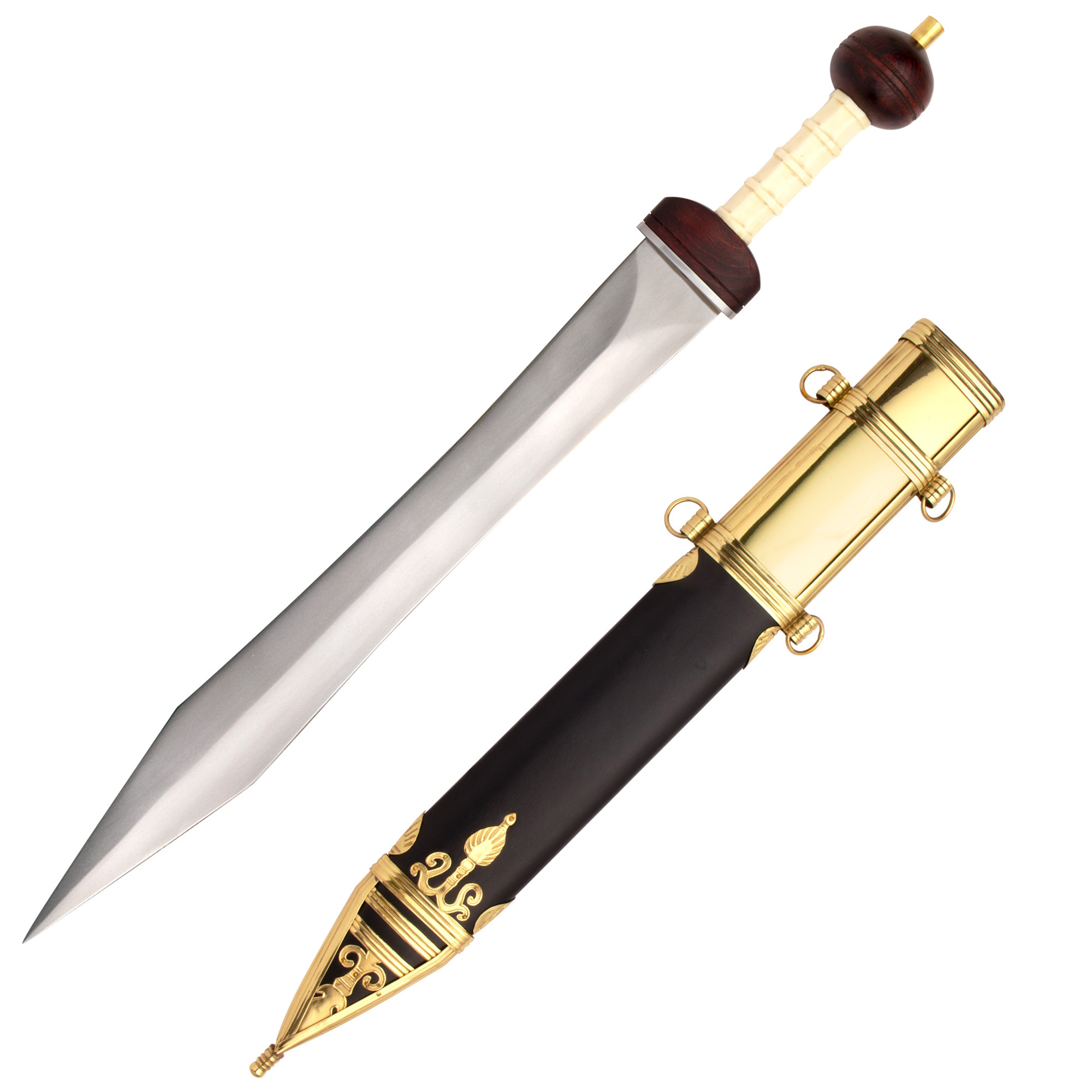
The Roman Army´s approach to warfare was direct and pragmatic. It chose the Gladius as its principal sidearm because it was practical and efficient and excelled in any close combat situation. The early Gladius (our version is the Maintz pattern) was wasp waisted with a long point that combined cutting power and stabbing ability in one handy weapon. Later versions (we offer you the Pompeii) were not waisted and had a shorter point but were just as effective - and easier to make. Both swords served side-by-side for many years and it was not uncommon to find 4th century legionnaires carrying the earlier model. This is the sword that conquered most of the known world. Its blade is made of high carbon steel. The Maintz Pattern Gladius also features a faux ivory grip and ornate brass applications on the scabbard.
Details:
Total length: 28"
Blade size: 19 1/2" long, 2 1/4" wide
Weight: 2 lbs. 6 oz.
Variants from €259.00*
€288.00*
Im Außenlager - in 5-7 Tagen bei Dir zu Hause
This website uses cookies to ensure the best experience possible. More information...